

PPF for Off-Road Trucks can help shield painted body panels from desert brush, trail scratches, loose gravel, small rocks, and other contact that comes with driving beyond paved roads. Trucks used around Lancaster, CA, Palmdale, CA, Quartz Hill, CA, and surrounding High Desert areas may encounter narrow trails, dry vegetation, sand, rocky surfaces, and flying debris that can leave marks on exposed paint.
Those long, thin scratches down the doors and bedsides are often called trail pinstripes. They can happen when branches, shrubs, or dry brush drag along the side of a truck as it moves down a narrow trail.
Paint protection film, commonly called PPF, creates a transparent polyurethane layer over suitable exterior surfaces. Instead of brush or loose debris touching the paint first, it contacts the film.
California Car Pros provides Paint Protection Film for trucks, SUVs, cars, Teslas, and other vehicles throughout the Antelope Valley. Our certified installers use California Car Pro Paint Protection Film, and our products and services carry warranty coverage.
PPF cannot make an off-road truck immune to trail damage. Thick branches, hard impacts, deep gouges, body contact with rocks, and collisions can still damage film, paint, or body panels.
What PPF can do is give selected painted areas a sacrificial surface that takes many forms of lighter trail contact before the factory finish underneath.
Table of Contents
- Why Off-Road Trucks Get Trail Scratches
- How PPF Helps Protect Truck Paint
- What Are Desert Pinstripes?
- Which Truck Panels Need PPF Most?
- PPF for Doors and Bedsides
- PPF for Rocker Panels and Lower Doors
- PPF for the Hood and Front Fenders
- PPF for Mirrors and Headlights
- Full-Body PPF for Off-Road Trucks
- What PPF Cannot Protect Against
- Can PPF Self-Heal Trail Marks?
- Should Paint Correction Come Before Truck PPF?
- PPF vs Ceramic Coating for Off-Road Trucks
- How to Wash a PPF-Covered Truck After a Trail Run
- What to Ask Before Installing Off-Road Truck PPF
- PPF for Off-Road Trucks in the Antelope Valley
- Off-Road Truck PPF FAQs
Why Off-Road Trucks Get Trail Scratches
Off-road trucks face a different type of exterior contact than vehicles driven mostly on paved streets.
A trail may look wide enough until the truck reaches a section where dry vegetation grows close to both sides.
As the truck passes, branches and shrubs can drag along:
- Front fenders
- Doors
- Rear doors
- Bedside panels
- Mirror caps
- Rocker panels
- Rear quarter areas
Loose gravel creates another problem.
Tires can throw rocks and grit against lower body panels, while vehicles ahead can send debris toward the bumper, hood, and windshield area.
3M states that its automotive PPF is designed to help protect vulnerable vehicle surfaces from stone chips, scratches, bug damage, road tar, stains, automotive fluid stains, and harsh outdoor exposure.
XPEL also states that PPF can be useful for off-road driving because it provides a barrier against scratches, chips, and debris commonly encountered on rough terrain.
That does not mean every type of off-road damage is preventable.
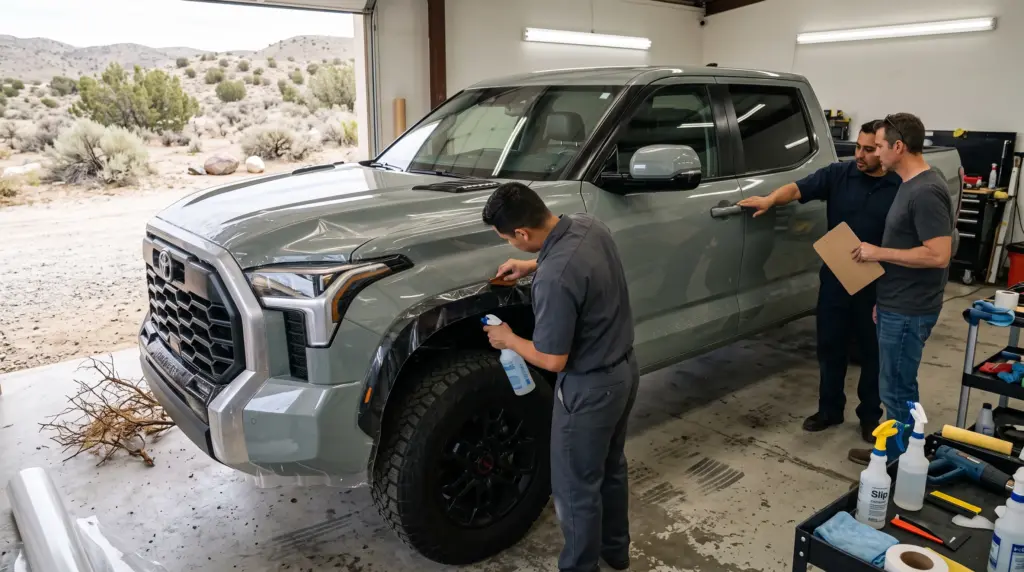
PPF works best as a barrier against many forms of lighter surface contact.
How PPF Helps Protect Truck Paint
PPF is a flexible polyurethane film installed over suitable vehicle surfaces.
The film sits above the paint.
When brush drags along the side of a protected truck, the brush contacts the film first.
When small gravel reaches a protected rocker panel, it hits the film before the painted surface underneath.
That sacrificial-layer concept is one of the main reasons PPF is used.
3M’s Paint Protection Film Series 150 is designed to guard vehicle surfaces from stone chips and scratches and includes self-healing technology for minor marks in the film.
California Car Pros installs PPF on areas ranging from front-end panels to broader vehicle coverage.
For an off-road truck, coverage may need to be planned differently from a street-driven sports car.
A sports car owner may focus heavily on the bumper and hood.
A truck owner who regularly follows narrow desert trails may care just as much about doors, bedsides, rocker panels, and mirrors.
What Are Desert Pinstripes?
“Desert pinstripes” is a common nickname for long scratches or marks running along the side of an off-road vehicle.
They can occur when vegetation brushes against the body as the vehicle moves down a narrow trail.
The marks may range from light surface scuffs to deeper scratches.
Some lighter scratches may only affect the upper surface.
Others can cut farther into the clear coat or paint.
PPF gives the brush a film surface to contact first.
That can be useful on trucks used in areas where trail vegetation regularly reaches the body.
PPF still has limits.
A thick branch pressed hard against a moving truck may cut through film.
Sharp objects can puncture it.
A severe impact can damage the body panel under the film.
The goal is to reduce everyday surface wear, not promise that every trail obstacle becomes harmless.
Which Truck Panels Need PPF Most?
PPF for Off-Road Trucks should be planned around how and where the truck is used.
Common areas to discuss include:
- Front bumper
- Full hood
- Front fenders
- Mirror caps
- Front doors
- Rear doors
- Rocker panels
- Bedside panels
- Lower quarter areas
- Headlights
- Tailgate
A truck that sees mostly highway driving may place more emphasis on the front end.
A truck regularly driven through brush may benefit from broader side coverage.
A truck used on rocky trails may put more emphasis on lower body panels.
The useful question is not simply, “How much PPF should I buy?”
Ask which areas of your truck actually receive the most contact.
PPF for Doors and Bedsides
Doors and bedsides are prime candidates for PPF on trucks that regularly encounter brush.
These panels form large sections of the vehicle’s sides.
When a trail narrows, vegetation may drag across the body for several feet.
That can create long scratches rather than isolated chips.
Protective film across full door panels and bedsides creates a continuous sacrificial surface over those painted areas.
Full-panel coverage can also avoid partial film lines in the middle of large body panels.
Truck owners should ask which edges can be wrapped and where seams may be needed.
Body style can affect what is possible.
Door handles, badges, flares, trim, fuel doors, and body contours all need to be considered during the installation plan.
PPF for Rocker Panels and Lower Doors
Rocker panels and lower doors can receive heavy exposure on unpaved roads.
Truck tires can throw:
- Gravel
- Sand
- Dirt
- Mud
- Small stones
toward the lower body.
Larger tires or modified wheel fitment may also change where debris travels.
PPF on rocker panels and lower doors can add a barrier over these high-contact surfaces.
This area deserves attention even if you do not want to cover every painted panel on the truck.
Ask the installer to look at your tire setup, mud flaps, running boards, fender flares, and normal trail use.
Those details can help identify where film coverage will be most useful.
PPF for the Hood and Front Fenders
Off-road trucks still spend time on highways and paved roads.
That means front-end PPF remains useful even when trail scratches are the main concern.
A Full Front PPF setup can include areas such as:
- Front bumper
- Full hood
- Full front fenders
- Mirrors
- Headlights
California Car Pros provides PPF installation for drivers who want front-end or broader coverage.
On an off-road truck, full hood coverage can help with both road debris and branches that pass over the front of the vehicle.
Front fenders can also see gravel thrown from the tires or debris encountered on narrow trails.
PPF for Mirrors and Headlights
Mirror caps can be among the first parts of a truck to meet brush.
They stick out farther than much of the body.
That makes mirror coverage worth discussing if you regularly drive narrow trails.
Headlights face a different type of exposure.
They can encounter:
- Small stones
- Gravel
- Sand
- Bugs
- Road debris
Transparent PPF can place a film layer over compatible headlight surfaces.
Ask whether mirror and headlight coverage is included in the PPF package you are considering.
Package names do not always tell you every surface that receives film.
Full-Body PPF for Off-Road Trucks
Full-body PPF gives off-road truck owners the broadest film coverage.
Instead of protecting only the nose, film can extend across:
- Hood
- Fenders
- Doors
- Bedsides
- Tailgate
- Roof where suitable
- Bumpers when suitable
- Other painted exterior panels
This may make sense for a newer truck that regularly sees narrow trails.
It can also appeal to owners who spent time finding a specific factory paint color and want to keep that paint covered while using the truck outdoors.
Full-body PPF still does not turn painted body panels into armor.
Film can be cut, torn, punctured, or damaged.
The advantage is that many lighter scratches and chips reach a replaceable film layer rather than directly reaching the factory paint.
If a section of film becomes heavily damaged, ask the installer whether that panel’s PPF can be replaced without redoing the entire truck.
What PPF Cannot Protect Against
PPF has real limits, especially off road.
Do not expect film to prevent damage from:
- Large branches pushed hard into the body
- Deep gouges
- Metal-on-rock contact
- Body panels hitting boulders
- Collision damage
- Deep dents
- Severe abrasion
- Rollovers
- Heavy impacts
A rock slider handles a different job from PPF.
So do skid plates, bumpers, and other physical off-road protection parts.
PPF is surface protection for suitable exterior areas.
It is not structural armor.
Using the right protection for the right type of contact matters.
Can PPF Self-Heal Trail Marks?
Some modern PPF uses self-healing surface technology.
3M states that its Series 150 film allows minor scratches in the film to disappear.
XPEL also describes its polyurethane PPF as using a clear coat that can allow suitable light surface scratches to heal over time.
That can be useful after contact with light vegetation.
The phrase “minor scratches” matters.
A film surface lightly brushed by flexible vegetation is very different from film cut by a sharp branch.
Self-healing technology should not be expected to fix:
- Tears
- Punctures
- Deep cuts
- Missing film
- Heavy abrasion
If you return from a trail and see a mark, clean the truck first.
Dirt can make damage look worse than it is.
After washing, inspect the film under good lighting.
If a cut or lifted edge remains, contact the installer.
Should Paint Correction Come Before Truck PPF?
Paint condition should be inspected before PPF installation.
If the truck already has years of trail pinstripes, film will not magically erase them.
California Car Pros also provides Paint Correction for suitable paint defects.
Correction may help with issues such as:
- Light swirl marks
- Light scratches
- Haze
- Wash marks
- Some oxidation
Deep trail scratches may be too severe for polishing alone.
A scratch that has gone through the clear coat and into deeper paint layers may require another type of repair.
Do not assume every off-road truck needs full paint correction before PPF.
Have the paint inspected.
A new truck with clean paint may only need normal PPF preparation.
A used trail truck may need more work if you want to improve the appearance before covering it.
PPF vs Ceramic Coating for Off-Road Trucks
PPF and ceramic coating handle different parts of off-road vehicle care.
PPF
PPF may fit your goals if you are worried about:
- Brush scratches
- Trail pinstripes
- Rock chips
- Gravel
- Road debris
- Surface abrasion
Ceramic Coating
Ceramic Coating may fit your goals if you want:
- Easier washing
- Water beading
- Slickness
- Gloss
- Easier removal of routine dirt and grime
A ceramic coating should not be treated as a substitute for PPF when brush scratches are the concern.
Brush makes physical contact with the body.
PPF gives that contact a physical film layer to reach first.
Some truck owners use both PPF and ceramic coating.
Ask California Car Pros how the products should be planned and applied if you want both.
How to Wash a PPF-Covered Truck After a Trail Run
Do not start by rubbing dusty paint or PPF with a towel.
Off-road driving can leave sand, dirt, and grit across the vehicle.
Rinse loose material away first.
A sensible post-trail wash process includes:
- Let the truck cool.
- Rinse loose dirt and sand thoroughly.
- Flush debris from wheel wells and lower panels.
- Use compatible automotive wash soap.
- Wash with clean microfiber wash media.
- Work from cleaner upper panels toward dirty lower areas.
- Treat film edges gently.
- Rinse thoroughly.
- Dry with clean microfiber or an air blower.
- Inspect the PPF after the truck is clean.
Do not aim high-pressure water directly into exposed film edges.
If mud or vegetation is packed around an edge, avoid digging it out with a sharp object.
Have the area cleaned carefully.
California Car Pros also provides Auto Detailing if the truck needs more cleaning than a normal maintenance wash.
What to Ask Before Installing Off-Road Truck PPF
Before booking PPF for Off-Road Trucks, ask the installer questions based on how you use the vehicle.
Consider asking:
- Which PPF product will be installed?
- Which panels should I cover for brush contact?
- Should I cover full doors or only lower sections?
- Should the bedsides receive full-panel film?
- Are rocker panels included?
- Are mirror caps included?
- Are headlights included?
- Which film edges can be wrapped?
- Where will seams appear?
- How will fender flares affect the installation?
- Does aftermarket trim need removal?
- Does the truck need paint correction first?
- What happens if one panel of PPF is damaged on a trail?
- Can that panel’s film be replaced separately?
- What warranty comes with the film?
- How should I wash the truck after off-road use?
Bring the truck to the shop if possible.
Seeing the tire setup, body shape, flares, running boards, and existing trail marks can help the installer plan useful coverage.
PPF for Off-Road Trucks in the Antelope Valley
California Car Pros provides PPF for trucks and other vehicles throughout Lancaster, CA, Palmdale, CA, Quartz Hill, CA, and nearby Antelope Valley communities.
Our Lancaster shop is located at:
California Car Pros
43235 Gingham Ave #108
Lancaster, CA 93535
Phone: (661) 744-5533
Learn more on our Lancaster, CA location page.
Drivers closer to Palmdale, CA can also review our Palmdale, CA location.
California Car Pros provides:
If your truck regularly sees desert trails, tell our team how you actually use it.
A highway-driven truck may need more attention on the bumper and hood.
A trail truck may need doors, mirrors, bedsides, and rocker panels added to the conversation.
A newer off-road build may be a candidate for broad film coverage before trail pinstripes start appearing.
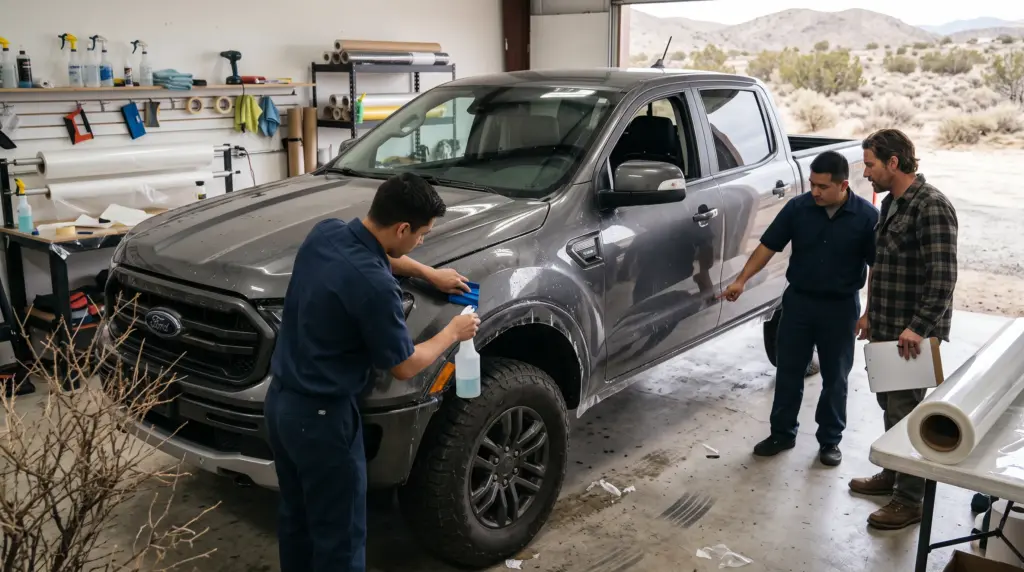
Call (661) 744-5533 or visit the California Car Pros contact page to discuss PPF coverage for your truck.
Off-Road Truck PPF FAQs
1. Does PPF help protect a truck from desert brush?
Yes. PPF places a polyurethane film over suitable painted surfaces, giving brush a sacrificial film layer to contact before the paint. XPEL identifies off-road scratches, chips, and debris as conditions where PPF can help. Severe branches or deep impacts can still damage the film or body.
2. Can PPF prevent desert pinstripes?
PPF can help reduce direct paint contact from light brush and vegetation, which can reduce many surface scratches on covered panels. It cannot guarantee protection from sharp branches, heavy pressure, deep cuts, or severe trail contact.
3. Which parts of an off-road truck should get PPF?
Doors, bedsides, rocker panels, lower doors, front fenders, mirrors, hood, bumper, and headlights are all worth discussing. The best coverage depends on whether your truck sees narrow brush trails, loose gravel, highway driving, or a combination of conditions.
4. Can PPF self-heal brush scratches?
Some PPF products use self-healing technology for suitable light surface marks. 3M states that minor scratches in its Series 150 film can disappear. Deep cuts, tears, and punctures require inspection and may call for film replacement.
5. Is ceramic coating enough for desert brush?
Ceramic coating and PPF serve different jobs. Ceramic coating can help with water behavior and easier cleaning. PPF is a physical film and is the more relevant service when your concern is branches, gravel, and direct trail contact.
6. Should an older off-road truck get paint correction before PPF?
It depends on the paint. Light swirls and scratches may be suitable for correction before film is installed. Deep trail scratches may need another type of repair. California Car Pros can inspect the paint before recommending correction.
7. Where can I get PPF for an off-road truck in the Antelope Valley?
California Car Pros installs Paint Protection Film for trucks and other vehicles in Lancaster, CA and Palmdale, CA, serving drivers throughout the Antelope Valley. Call (661) 744-5533 or use the contact page to discuss trail use and the panels you want protected.
Sources
- 3M Paint Protection Film Series 150
Publisher: 3M
Publication Date: No publication date listed - 3M Paint Protection Film PUL2008
Publisher: 3M
Publication Date: No publication date listed - XPEL Frequently Asked Questions
Publisher: XPEL
Publication Date: No publication date listed - XPEL ULTIMATE PLUS Technical Data Sheet
Publisher: XPEL
Publication Date: No publication date listed - California Car Pros Paint Protection Film
Publisher: California Car Pros
Publication Date: No publication date listed - California Car Pros Paint Correction
Publisher: California Car Pros
Publication Date: No publication date listed - California Car Pros Auto Detailing
Publisher: California Car Pros
Publication Date: No publication date listed - California Car Pros Contact Page
Publisher: California Car Pros
Publication Date: No publication date listed
Transform Your Car's Appearance: Color Change Wraps in Palmdale, CA
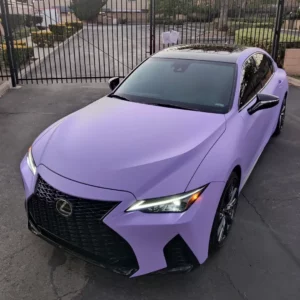
Give your vehicle a fresh, new look with color change wraps from California Car Pros in Palmdale, CA. Discover how our custom wraps can transform your car's appearance while protecting its original paint.
Product Brand: Car Pros
5
Pros
- Give your vehicle a fresh, new look with color change wraps from California Car Pros in Palmdale, CA. Discover how our custom wraps can transform your car's appearance while protecting its original paint.
