

Full Windshield Ceramic Tint in Lancaster gets attention from drivers who want less heat coming through the largest piece of glass in the vehicle without turning the windshield visibly dark. On a sunny commute through Lancaster, CA, Palmdale, CA, or the surrounding Antelope Valley, the difference people usually want is simple: less of that hot, direct feeling on the face, arms, steering wheel, dashboard, and front seats.
There is one major point to understand before choosing film.
California generally does not allow ordinary aftermarket tint across the full windshield of a vehicle driven on public roads. California Vehicle Code Section 26708 permits a regulated strip at the upper portion of the windshield and contains a narrow medical exception for qualifying clear, colorless, transparent film. A film can look nearly clear and still fall outside what California allows for normal full-windshield use.
That legal distinction matters just as much as heat performance.
California Car Pros offers window tint services in Lancaster, CA and Palmdale, CA, including ceramic film and windshield-related tint options where legally suitable.
This guide explains how high-light-transmission ceramic film handles solar heat, what drivers tend to notice behind the wheel, why the windshield has such a large effect on cabin comfort, and what California drivers need to know before scheduling an installation.
Table of Contents
- What Is Full Windshield Ceramic Tint?
- Is Full Windshield Ceramic Tint Legal in California?
- Why the Windshield Feels So Hot on Lancaster Commutes
- What Clear Heat-Rejection Film Feels Like While Driving
- Clear-Looking Film vs. Dark Windshield Tint
- How Ceramic Film Rejects Heat
- What VLT, TSER and IR Rejection Mean
- Does Windshield Film Keep a Parked Car Cooler?
- Can Windshield Tint Reduce A/C Demand?
- Windshield Tint on EVs and Teslas
- Windshield Cameras, Sensors and Driver-Assist Systems
- Top Windshield Strips as a California-Friendly Option
- Questions to Ask Before Windshield Film Installation
- Window Tint in Lancaster, Palmdale and Quartz Hill
- Frequently Asked Questions
- Schedule Window Tint in Lancaster, CA
- Sources and References
What Is Full Windshield Ceramic Tint in Lancaster?
Full Windshield Ceramic Tint in Lancaster usually refers to a ceramic automotive window film installed across most or all of the inside surface of the windshield.
Unlike dark privacy tint, windshield-focused ceramic film is often selected in a high Visible Light Transmittance range so the glass still appears relatively light.
The goal is usually heat control rather than privacy.
Ceramic automotive films use non-metallic materials designed to reject portions of incoming solar energy.
California Car Pros currently uses Geoshield automotive window films and lists ceramic windshield tint among its window-tint options.
Geoshield’s current ceramic-film lineup includes lighter film choices along with darker shades. Its product data lists strong infrared rejection and UV rejection across its ceramic ranges.
Other film makers show the same principle.
3M’s current Crystalline line includes high-VLT films that remain relatively light while rejecting part of the solar and infrared energy entering through vehicle glass.
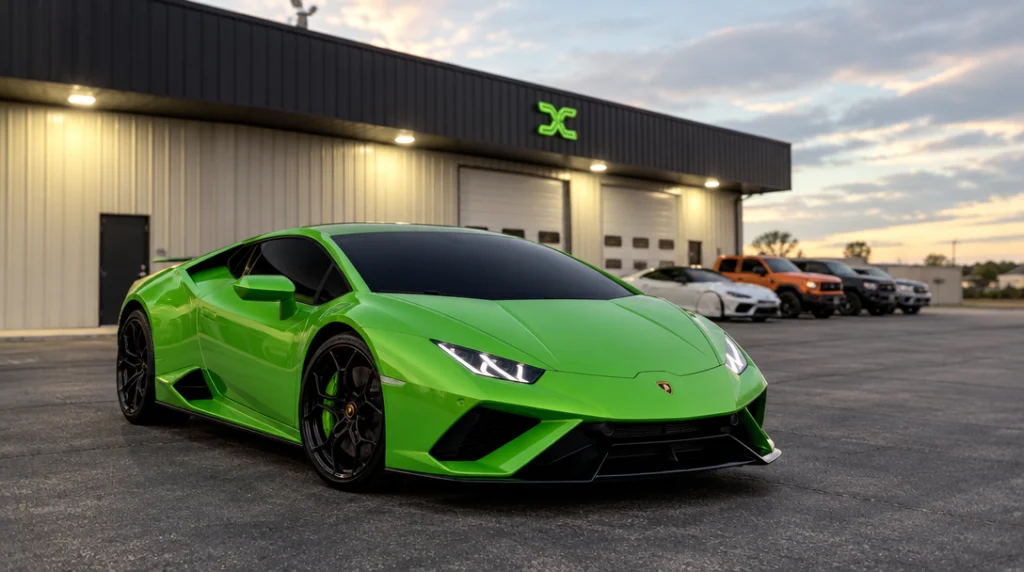
This is why a film does not need to look black to change how much solar heat reaches the cabin.
Is Full Windshield Ceramic Tint Legal in California?
For ordinary road use, California law does not give drivers permission to cover the full windshield with aftermarket tint simply because the film looks clear.
California Vehicle Code Section 26708 starts with a broad rule against placing material on the windshield.
The law does allow transparent material on the upper portion of the windshield when the placement and other requirements in the statute are met.
A separate part of the law allows clear, colorless, transparent material across the windshield under a medical exception.
That medical exception requires several conditions, including:
- At least 88% Visible Light Transmittance for the material
- Compliance of the filmed glazing with federal light-transmission requirements
- Film designed to reduce UVA exposure
- Documentation from a licensed dermatologist for a qualifying medical condition
- Removal or replacement if the material becomes damaged enough to interfere with clear vision
California Highway Patrol’s public guidance also states that aftermarket tint generally cannot be installed across the windshield.
So, when discussing Full Windshield Ceramic Tint in Lancaster, do not assume a light-looking ceramic film is automatically legal.
A 70%, 75%, or 80% film can look very light from the driver’s seat and still fail to meet California requirements for ordinary windshield use.
The law, not appearance, decides what is permitted.
Why the Windshield Feels So Hot on Lancaster Commutes
The windshield is one of the largest pieces of glass facing the sun while you drive.
During a morning or afternoon commute, sunlight can reach:
- Your face
- Your hands
- Your arms
- The steering wheel
- Dashboard surfaces
- Front seats
- Center console
That direct solar load can make a cabin feel hot even while the air conditioner is running.
The air temperature coming from the vents may be cool, but sunlight can still make your skin feel warm.
That is why drivers often describe heat-rejecting window film by how it feels rather than by cabin temperature alone.
Lancaster, CA drivers also spend plenty of time on open roads where the windshield may face direct sun for long stretches.
Trips along State Route 14, Avenue I, Avenue J, Sierra Highway, or routes between Lancaster, CA and Palmdale, CA can leave the front glass exposed to the sun for much of the drive.
What Full Windshield Ceramic Tint Feels Like on a Desert Commute
The biggest change from heat-rejecting film is not necessarily a darker view.
With a high-VLT film, the change may be more noticeable on your skin than through your eyes.
Drivers may notice less of the sharp radiant heat coming through the glass.
Think about sitting next to a sunny window.
The room itself may be air conditioned, yet sunlight coming through the glass can make one side of your body feel warm.
Automotive glass works in a similar way.
High-performing window film can reject part of that incoming solar energy before it reaches the cabin.
3M describes its lighter Crystalline films as capable of rejecting heat while keeping a high level of visibility.
Geoshield describes its ceramic films as providing infrared and solar heat control while maintaining optical clarity.
For a Lancaster, CA commute, that can translate into:
- Less radiant warmth on your face
- Less heat felt across your arms and hands
- Less solar load reaching the dashboard
- A more comfortable feeling while the sun is directly ahead
- Less dependence on very dark film for heat control
Actual results depend on the film, windshield glass, sun angle, vehicle, outside temperature, cabin color, and A/C settings.
Clear-Looking Ceramic Film vs. Dark Windshield Tint
Darkness and heat rejection are not the same thing.
This is one of the most useful ideas to understand when researching Full Windshield Ceramic Tint in Lancaster.
A dark film blocks more visible light.
A ceramic film can reject substantial solar or infrared energy while allowing much more visible light through.
That means a very dark film is not automatically the best heat-rejection film.
A lighter ceramic product can outperform some darker films in solar-control measurements.
This matters on a windshield because driver visibility needs to remain high.
It matters even more in California because windshield film faces legal restrictions regardless of whether the driver personally feels comfortable seeing through it.
When someone says “clear ceramic tint,” they often mean a high-VLT film that appears nearly clear from normal viewing distance.
It may not be technically colorless or 100% transparent.
Ask for the actual VLT instead of relying on terms such as clear, light, or nearly invisible.
How Ceramic Windshield Film Rejects Heat
Sunlight reaching vehicle glass contains several types of energy.
Visible light is the portion your eyes see.
Ultraviolet radiation is outside the visible range.
Infrared energy also sits outside the visible range and plays a role in the warmth you feel from the sun.
Ceramic window film is designed to manage parts of that solar spectrum without relying only on dark dye.
Geoshield’s current automotive ceramic lines use ceramic materials and are non-metallic.
That construction also avoids the signal concerns associated with some metallic films.
For a modern vehicle with:
- GPS
- Bluetooth
- Cellular connections
- Satellite radio
- Connected vehicle systems
non-metallic film can be a practical choice.
The film still needs to be selected based on its published numbers rather than the ceramic label alone.
VLT, TSER and IR Ratings for Full Windshield Ceramic Tint
Film specifications can look confusing until you know what each number describes.
Visible Light Transmittance
Visible Light Transmittance, or VLT, tells you how much visible light passes through.
Higher VLT means lighter film.
Lower VLT means darker film.
A 70% film lets more visible light through than a 35% film.
Remember that the final number at the glass can differ because the windshield itself does not transmit 100% of visible light.
Total Solar Energy Rejection
Total Solar Energy Rejection, or TSER, describes the percentage of total incoming solar energy rejected by the filmed glass.
This is one of the more useful measurements when your main goal is reducing solar heat.
Infrared Rejection
IR rejection describes how the film handles infrared energy across a stated wavelength range.
Film companies can publish different infrared measurements, so check whether two products are using the same testing method before comparing the numbers.
A very high IR number from one test should not automatically be compared with a TSER figure from another test.
UV Rejection
Many current ceramic automotive films reject a high percentage of UV radiation.
Geoshield lists 99% or greater UV rejection across its current automotive film families.
UV performance and heat performance are separate measurements.
Does Full Windshield Ceramic Tint Keep a Parked Car Cooler?
Solar-control glazing can reduce the amount of heat entering a parked vehicle, but the cabin can still become hot.
No window film turns a parked car into a cool room.
NREL has studied solar-load reduction in vehicles and found that reducing solar energy entering through glass can lower cabin temperatures under controlled testing.
In one NREL study, solar-reflective glazing film reduced cabin temperature during a hot-weather soak test.
The exact result from a commercial tint installation can be different.
A vehicle’s temperature depends on:
- Outside air temperature
- Length of time parked
- Windshield angle
- Glass area
- Interior color
- Vehicle color
- Film
- Roof glass
- Shade
- Sun angle
The practical goal is reducing how much solar energy enters rather than promising that a parked vehicle will stay cool.
Can Windshield Heat-Rejection Film Reduce A/C Demand?
Research supports the connection between lower solar load and lower cooling demand.
NREL vehicle testing found that solar-load reduction strategies could lower cabin temperature and reduce the energy needed during air-conditioning cooldown.
That does not mean every vehicle will use a fixed percentage less A/C after tinting.
Real driving is different from a controlled test.
Still, the relationship makes sense.
If less solar energy enters the cabin, the climate-control system has less incoming heat to fight.
Drivers may notice this most when:
- Driving toward the afternoon sun
- Starting a trip after outdoor parking
- Taking longer daytime drives
- Driving vehicles with large windshields
- Using an EV where climate control draws from the traction battery
The benefit is better described as reduced solar load rather than a guaranteed fuel or range increase.
Full Windshield Ceramic Tint on EVs and Teslas
EV owners often ask about windshield film because climate control uses battery energy.
A Tesla Model Y, Hyundai IONIQ 5, Kia EV6, Rivian R1S, Ford Mustang Mach-E, or another EV can have a large windshield and large areas of surrounding glass.
Reducing incoming solar heat may help the cabin reach a comfortable temperature with less cooling work.
That does not mean windshield tint adds a guaranteed number of miles to EV range.
Driving speed, battery temperature, outside temperature, elevation, tires, route, cabin settings, and many other factors affect range.
EV owners should also remember that the same California windshield rules apply.
Electric propulsion does not create a tint-law exception.
California Car Pros also offers dedicated Tesla window tint services for owners who want to discuss legal side, rear, windshield-strip, and other glass options.
Windshield Cameras, Sensors and Driver-Assist Systems
Modern windshields can contain much more than glass.
Vehicles may have:
- Forward-facing cameras
- Rain sensors
- Light sensors
- Driver-assist camera housings
- Heads-up display areas
- Antennas
- Defroster elements
- Inspection stickers
- Registration equipment
Film installation needs to account for these areas.
A windshield camera looks through a defined portion of glass.
The installer should know where the camera system sits and whether the vehicle maker has restrictions related to film, coatings, or obstructions in that area.
If your car uses a windshield-mounted driver-assist camera, tell the tint shop before installation.
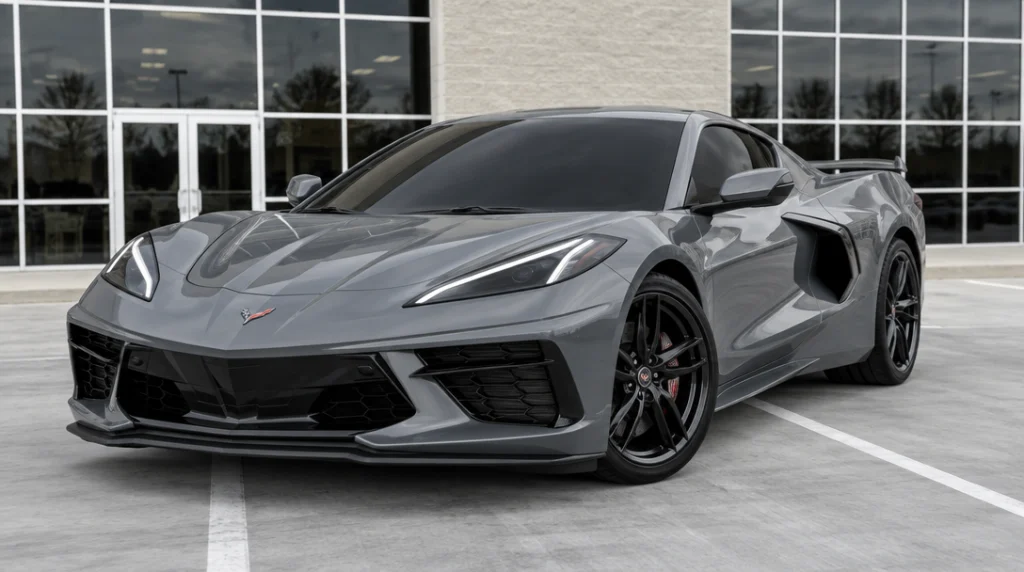
The same applies if the windshield has been replaced with aftermarket glass or if the camera was recently recalibrated.
A Windshield Glare Strip Can Be a California-Friendly Alternative
Drivers who cannot legally use full windshield film may still ask about a top windshield strip.
California Vehicle Code Section 26708 permits transparent material at the topmost portion of the windshield when the installation follows the placement, color, glare, and visibility conditions in the law.
California Car Pros lists a ceramic glare strip as one of its window tint options.
A top strip does not provide the same full-glass heat coverage as windshield film.
It can still help with sunlight entering near the upper part of the windshield.
For Lancaster, CA drivers who spend time driving into a low sun, a properly placed glare strip may be worth discussing.
Ask the installer how the legal placement applies to your seating position and windshield.
Questions to Ask Before Full Windshield Ceramic Tint in Lancaster
Before installing any windshield film, ask these questions.
Is This Installation Legal on My Vehicle?
This should come first.
Do not rely on the fact that the film looks clear.
Ask how California Vehicle Code Section 26708 applies to the installation.
What Is the Film’s VLT?
Get the actual Visible Light Transmittance.
Do not settle for “very light” or “basically clear.”
What Is the TSER?
TSER is useful when solar heat is your concern.
What Infrared Measurement Is Being Quoted?
Ask whether the number is IRR, IRER, or another test.
Is the Film Non-Metallic?
This can matter for connected vehicles and electronic systems.
Does My Windshield Have Cameras or Sensors?
Tell the installer what equipment is present near the glass.
What Warranty Comes With the Film?
California Car Pros currently lists lifetime warranty coverage on its ceramic tint packages and windshield ceramic tint option.
Ask what the warranty covers for the film selected for your vehicle.
Window Tint in Lancaster, Palmdale and Quartz Hill
California Car Pros provides window tint services for drivers in Lancaster, CA, Palmdale, CA, Quartz Hill, CA, and nearby Antelope Valley communities.
The Lancaster, CA location is:
California Car Pros
43235 Gingham Ave #108
Lancaster, CA 93535
(661) 744-5533
Drivers closer to Palmdale, CA can also visit the Palmdale location.
California Car Pros offers:
- Ceramic window tint
- Carbon window tint
- Front side window tint
- Side and rear window tint
- Ceramic glare strips
- Windshield ceramic options where legally suitable
- Tint removal
For Full Windshield Ceramic Tint in Lancaster, begin with the legal question before choosing film based on heat rejection alone.
If a full-windshield installation is not permitted for your situation, the team can discuss other window-film areas that may help with cabin comfort while staying within California rules.
Frequently Asked Questions About Full Windshield Ceramic Tint in Lancaster
1. Is full windshield ceramic tint legal in Lancaster, CA?
California generally prohibits aftermarket material across the full windshield for ordinary road use. The law permits a regulated upper windshield strip and has a narrow medical exception for qualifying clear, colorless, transparent film with required documentation. Ask how the current law applies to your vehicle before installation.
2. Is clear ceramic windshield tint really clear?
Many products described as clear windshield film are more accurately high-VLT films. They allow a large amount of visible light through and may look nearly clear, but they still have a measurable VLT. Ask for the exact specification.
3. Can light ceramic film reject heat without looking dark?
Yes. Current ceramic and multilayer automotive films can reject solar and infrared energy while allowing much more visible light through than dark privacy film. Darkness alone does not determine heat performance.
4. What does heat-rejecting windshield film feel like while driving?
The difference is often felt as reduced radiant warmth through the glass. Drivers may notice less heat on their face, hands, arms, dashboard, and front seats when sunlight is coming through the windshield. The effect changes with film, vehicle, sun angle, and weather.
5. Will windshield ceramic tint keep my car cool while parked?
It can reduce part of the solar load entering through the windshield, but a parked vehicle can still become very hot. NREL testing supports the idea that solar-control glazing can lower cabin temperatures under test conditions, but results vary by vehicle and environment.
6. Does clear windshield tint help an EV’s range?
Reducing solar heat can reduce some cabin cooling demand, which may affect energy use. It does not guarantee a fixed range increase. EV range depends on many factors beyond window film.
7. What can I install if full windshield tint is not legal for my vehicle?
A legally placed upper windshield glare strip may be an option. Side and rear glass can also have different legal rules. California Car Pros can discuss film choices based on the windows you want treated and current California requirements.
Ask About Ceramic Window Tint in Lancaster, CA
Full Windshield Ceramic Tint in Lancaster appeals to drivers because the windshield is such a large source of solar exposure during High Desert commuting.
A high-VLT ceramic film can look light while rejecting part of the solar and infrared energy passing through glass.
The comfort difference can show up as less radiant heat on your face and arms and less solar load entering the front of the cabin.
California law still comes first.
A nearly clear appearance does not automatically make full-windshield aftermarket film legal for normal road use.
Talk with California Car Pros about your vehicle, the glass you want treated, the film specifications, and the legal choices available for that window.
Call (661) 744-5533 or contact California Car Pros online to schedule an appointment.
You can also review window tint services, window tint in Lancaster, CA, Tesla window tint, or the Lancaster, CA location before scheduling.
Sources and References
- California Vehicle Code Section 26708
Publisher: State of California, reproduced by Justia
Publication Date: 2025 code, amended effective January 1, 2026
URL: https://law.justia.com/codes/california/code-veh/division-12/chapter-4/section-26708/ - California Highway Patrol FAQ: After-Market Tinting
Publisher: California Highway Patrol
Publication Date: Current guidance accessed November 2026
URL: https://www.chp.ca.gov/faq/ - 3M Automotive Window Film Crystalline Series Technical Data Sheet
Publisher: 3M
Publication Date: August 2025
URL: https://multimedia.3m.com/mws/media/2628835O/cystalline-technical-data-sheet.pdf - Climate Control Load Reduction Strategies for Electric Drive Vehicles in Warm Weather
Publisher: National Renewable Energy Laboratory / SAE International
Publication Date: April 14, 2015
URL: https://www.nrel.gov/docs/fy15osti/63551.pdf - Geoshield Automotive Window Film
Publisher: Geoshield
Publication Date: Current product information accessed November 2026
URL: https://geoshieldusa.com/collections/automotive-window-film - Geoshield Pro Nano Ceramic Film
Publisher: Geoshield
Publication Date: Current product information accessed November 2026
URL: https://geoshieldusa.com/collections/all-products/products/pro-nano - Window Tinting in Lancaster, CA & Palmdale, CA
Publisher: California Car Pros
Publication Date: Not listed
URL: https://californiacarpros.com/services/window-tint/ - Window Tint Lancaster, CA
Publisher: California Car Pros
Publication Date: Not listed
URL: https://californiacarpros.com/window-tint-lancaster/ - Lancaster Location
Publisher: California Car Pros
Publication Date: Not listed
URL: https://californiacarpros.com/locations/lancaster-location/
Transform Your Car's Appearance: Color Change Wraps in Palmdale, CA
Give your vehicle a fresh, new look with color change wraps from California Car Pros in Palmdale, CA. Discover how our custom wraps can transform your car's appearance while protecting its original paint.
Product Brand: Car Pros
5
Pros
- Give your vehicle a fresh, new look with color change wraps from California Car Pros in Palmdale, CA. Discover how our custom wraps can transform your car's appearance while protecting its original paint.
