

Engine Bay Detailing can be worth adding to your next detailing appointment when dust, grease, leaves, sand, and road grime have collected under the hood. Drivers in Lancaster, CA and Palmdale, CA deal with dry conditions that can leave fine dirt across engine covers, painted surfaces, hoses, brackets, and other under-hood areas. A careful cleaning can improve appearance and make the engine compartment easier to inspect visually.
California Car Pros provides professional auto detailing for drivers throughout Lancaster, CA, Palmdale, CA, and surrounding Antelope Valley communities. Engine cleaning can be added to the detailing process, according to the current California Car Pros detailing page.
Cleaning an engine compartment takes a different approach from washing exterior paint. Modern vehicles contain wiring, sensors, electrical connectors, intake parts, battery components, fuse boxes, and other areas that should not be flooded with water.
So, is Engine Bay Detailing worth adding? It can make sense when the compartment has visible buildup, when you recently purchased a used vehicle, before a car event, or when you simply want the under-hood area to match a freshly detailed exterior.
Call California Car Pros at (661) 744-5533 or use our contact page to ask about adding engine cleaning to your detailing appointment.
Table of Contents
- What Is Engine Bay Detailing?
- Is Engine Bay Detailing Worth Adding?
- What Builds Up Inside an Engine Bay?
- Engine Bay Detailing for Antelope Valley Dust
- What Happens During Engine Bay Detailing?
- Why Electrical Components Need Care
- Should You Pressure Wash an Engine Bay?
- Can Engine Bay Detailing Help You Spot Leaks?
- Engine Bay Detailing Before Selling a Car
- Engine Bay Detailing for Car Enthusiasts
- Engine Bay Detailing for Trucks and SUVs
- What About Teslas and Other EVs?
- How Often Should You Clean an Engine Bay?
- What Engine Bay Detailing Cannot Fix
- Should You Add Engine Cleaning to a Full Detail?
- Other Services to Consider
- Schedule Auto Detailing in Lancaster or Palmdale
- Frequently Asked Questions
- Sources
What Is Engine Bay Detailing?
Engine Bay Detailing is the process of cleaning accessible surfaces beneath the hood while taking care around parts that should not receive excessive moisture.
The engine compartment contains many different materials and components.
These may include:
- Plastic engine covers
- Rubber hoses
- Painted metal
- Bare metal
- Wiring
- Electrical connectors
- Sensors
- Caps
- Fluid reservoirs
- Battery components
- Fuse boxes
- Intake parts
- Weather seals
- Brackets
Cleaning all of these areas like an exterior body panel would not make sense.
A careful Engine Bay Detailing service starts by looking at the vehicle and deciding which areas can be cleaned safely and which parts need to stay dry or receive limited moisture.

California Car Pros states on its current auto detailing page that engine cleaning can be part of the detailing process but is typically offered as an additional service.
Is Engine Bay Detailing Worth Adding?
Engine Bay Detailing can be worth adding when the area under the hood has reached the point where normal dusting is no longer enough.
You might consider the service when:
- Engine covers are coated in dust
- Leaves are collecting near the cowl
- Road grime is visible
- Plastic covers look neglected
- Greasy residue has collected on accessible surfaces
- The engine bay has not been cleaned for years
- You recently purchased a used vehicle
- You are preparing for a car gathering
- You want the entire vehicle cleaned rather than only the cabin and exterior
A relatively clean engine bay may not need this service every time the vehicle is detailed.
The condition of the compartment should help guide the decision.
Here’s what matters: Engine Bay Detailing is mainly a cleaning and appearance service. It should not be confused with engine repair, leak repair, electrical diagnosis, or mechanical maintenance.
What Builds Up Inside an Engine Bay?
The hood stays closed most of the time, but the engine compartment is not sealed from the outside world.
Air moves through the front of the vehicle while driving.
Fine road dirt can enter.
Leaves may settle near the windshield cowl and hood openings.
Mud and road spray can reach lower sections.
Small amounts of oily residue may collect around certain components over time.
Common under-hood buildup can include:
- Dust
- Sand
- Leaves
- Pollen
- Road film
- Grease
- Mud
- Bug debris
- Dried water residue
- Oily grime
Autogeek’s engine detailing guide recommends removing loose debris before applying cleaners. It also recommends protecting sensitive parts before cleaning and using controlled water rather than spraying sensitive connectors directly.
Removing this material can make an older engine compartment look much cleaner.
Engine Bay Detailing for Antelope Valley Dust
Engine Bay Detailing can be especially useful around Lancaster, CA and Palmdale, CA because dry High Desert driving conditions can leave dust in areas many owners rarely clean.
Vehicles that regularly travel around:
- Gravel lots
- Construction areas
- Unpaved roads
- Rural properties
- Work sites
- Desert recreation areas
may collect under-hood dirt faster than vehicles that spend nearly all their time on clean paved roads.
Fine dust can settle across broad plastic engine covers and work into narrow areas around brackets and hoses.
A clean exterior does not mean the engine compartment is clean.
You may wash your vehicle every week while dirt beneath the hood continues collecting for months.
That is why adding Engine Bay Detailing occasionally can make sense for Antelope Valley drivers.
What Happens During Engine Bay Detailing?
The process can change based on the vehicle, age, engine layout, and amount of buildup.
A careful cleaning may involve several stages.
Removing Loose Engine Bay Debris
Loose material should generally come out before wet cleaning begins.
Leaves, dirt, and other debris can be removed from accessible areas with brushes, air, or vacuuming equipment.
Autogeek recommends clearing debris from hood, grille, and vent openings before applying degreaser.
Doing this first keeps loose dirt from turning into muddy residue once moisture is introduced.
Looking Over Sensitive Areas
The engine bay should be looked over before cleaners or water are used.
Parts that may need special care can include:
- Electrical connectors
- Sensors
- Air intake openings
- Battery terminals
- Fuse boxes
- Ignition parts
- Exposed wiring
- Other moisture-sensitive areas
The exact layout changes from one vehicle to another.
Cleaning Greasy Areas
Suitable engine-safe cleaning products may be used on surfaces with oily buildup or grime.
Not every surface needs heavy degreaser.
Light dust may require a much gentler approach.
This is another reason Engine Bay Detailing should be adjusted to the condition of the car rather than following the same routine on every vehicle.
Agitating Dirt
Brushes can help loosen grime from textured plastic, engine covers, caps, painted surfaces, and other accessible parts.
Smaller brushes can reach around narrow gaps.
The goal is to loosen contamination without damaging wiring, labels, finishes, or delicate components.
Controlled Rinsing or Wiping
Not every engine compartment needs to be heavily rinsed.
Some sections may be cleaned using damp towels and controlled product application.
When rinsing is suitable, low-pressure water is safer than aggressively blasting the area.
Autogeek’s published guide recommends low-pressure rinsing and avoiding direct high-pressure spray on sensitive electrical connectors.
Drying the Engine Compartment
Water should not be allowed to remain pooled around engine components.
Towels, air movement, or other controlled drying methods can help remove remaining moisture.
The compartment should be clean and dry before any finishing product is placed on suitable plastic or rubber areas.
Finishing Plastic and Rubber Surfaces
Some detailing processes use a suitable dressing on applicable plastic and rubber parts after cleaning.
This can give dull-looking engine covers, weather seals, and other surfaces a cleaner appearance.
The product needs to match the material.
Why Electrical Components Need Care
Electrical parts are one of the main reasons Engine Bay Detailing requires caution.
Modern vehicles rely heavily on electronics.
Depending on the vehicle, the engine compartment may contain:
- Control modules
- Sensors
- Relays
- Fuse boxes
- Connectors
- Wiring harnesses
- Battery terminals
- Ignition parts
Autogeek recommends protecting sensitive electrical components before wet cleaning and warns against spraying high-pressure water directly at electrical connectors.
An older vehicle can have its own concerns.
Weathered wiring insulation, older connectors, aftermarket electronics, exposed components, and previous repairs can change how an engine bay should be approached.
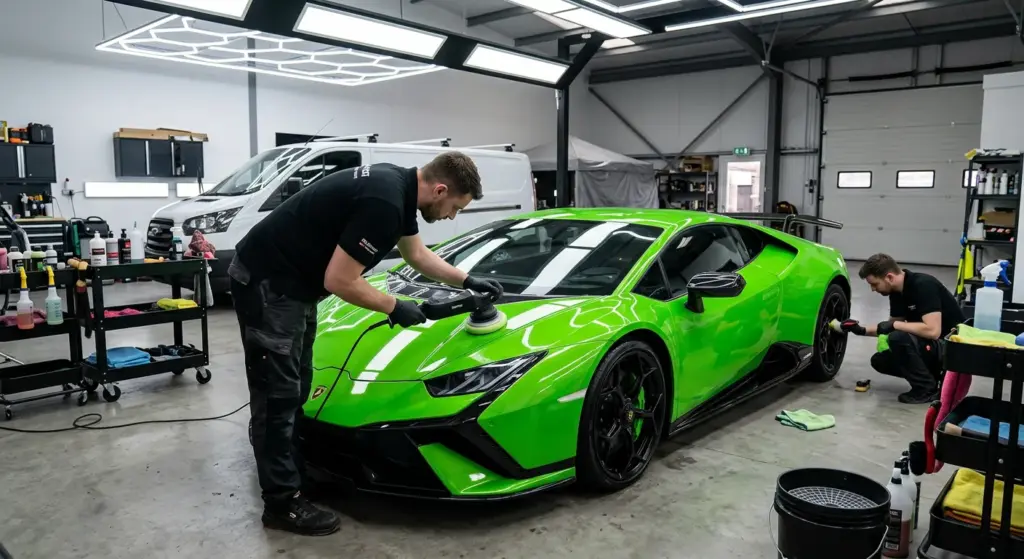
Tell your detailer if you know the vehicle has electrical trouble, aftermarket wiring, or under-hood parts that need special care.
Should You Pressure Wash an Engine Bay?
Using strong pressure around an engine compartment is not the same as pressure washing a driveway.
A concentrated stream of water can reach places that normal rain and road spray may not.
It can also push water around connectors and openings.
Autogeek recommends low-pressure water for engine rinsing and advises keeping high-pressure spray away from sensitive electrical connectors.
For many areas, brushes, towels, air, controlled cleaner application, and limited moisture are enough.
The real question is not how quickly dirt can be blasted away.
It is how the engine compartment can be cleaned while reducing unnecessary moisture around sensitive parts.
Can Engine Bay Detailing Help You Spot Leaks?
Engine Bay Detailing can make the compartment easier to look over.
Old layers of grime may hide where fresh fluid has appeared.
Once accessible surfaces are cleaner, new oily residue can sometimes stand out more clearly.
This does not mean a detailer is diagnosing a leak.
Engine detailing is a cleaning service.
Leak diagnosis belongs with an automotive repair technician.
If you notice fresh:
- Engine oil
- Coolant
- Brake fluid
- Transmission fluid
- Fuel residue
- Unusual smoke
- Strong fuel smells
have the vehicle checked by a qualified repair shop.
Cleaning can make fresh contamination easier to notice, but it cannot determine the mechanical cause on its own.
Engine Bay Detailing Before Selling a Car
Engine Bay Detailing can also make sense before listing a vehicle for sale.
Potential buyers often look beyond the paint and interior.
Some will open the hood.
A compartment covered in dust, leaves, and years of grime can make the vehicle look neglected even when it has received regular mechanical maintenance.
Cleaning accessible under-hood surfaces can make the area look more cared for.
There is one caution.
An engine bay should not be dressed so heavily that every surface looks wet or greasy.
A clean, natural appearance often makes more sense than covering everything with a shiny product.
If there is an active leak, cleaning should not be used to hide it from a buyer.
Mechanical problems should be handled separately and disclosed as required.
Engine Bay Detailing for Car Enthusiasts
Car enthusiasts often pay attention to areas casual owners rarely see.
That includes the engine compartment.
A clean bay can matter when preparing for:
- Cars and coffee events
- Local meets
- Shows
- Photo sessions
- Club gatherings
- Vehicle displays
Engine Bay Detailing can help clean dusty covers, painted areas, plastics, and other visible under-hood sections before an event.
Owners with modified engines should tell the detailer about aftermarket parts before cleaning begins.
Modified vehicles may have:
- Open-air intake systems
- Aftermarket electronics
- Custom wiring
- Polished metal components
- Painted engine covers
- Carbon-fiber parts
Those materials and parts may need their own cleaning approach.
Engine Bay Detailing for Trucks and SUVs
Trucks and SUVs used for work or recreation may see more under-hood dirt than a commuter sedan.
Vehicles that travel through dusty work sites, dirt access roads, ranch areas, or construction zones can collect material throughout the engine compartment.
Engine Bay Detailing may be worth adding when a truck has:
- Heavy dust on plastic covers
- Dirt around the hood opening
- Leaves near the cowl
- Mud on accessible lower areas
- Road grime around painted metal
- Years of accumulated dirt
California Car Pros provides auto detailing for cars, SUVs, pickups, family vehicles, and enthusiast vehicles.
Tell the team how your truck is used when scheduling so the vehicle’s condition can be discussed before work starts.
What About Teslas and Other EVs?
Electric vehicles require their own approach.
A Tesla does not have a traditional gasoline engine bay, so traditional Engine Bay Detailing does not apply in exactly the same way.
EVs may have a front trunk, service panels, high-voltage components, electronics, cooling hardware, and other covered areas.
High-voltage systems should not be treated like ordinary engine components.
Owners should follow the vehicle manufacturer’s care directions and leave high-voltage service areas to properly trained personnel.
California Car Pros provides dedicated Tesla detailing along with Tesla paint protection film, Tesla ceramic coating, Tesla window tint, and Tesla vinyl wrap.
If you own an EV and want areas beneath the hood cleaned, discuss the specific vehicle with California Car Pros before scheduling.
How Often Should You Clean an Engine Bay?
There is no fixed Engine Bay Detailing schedule that fits every vehicle.
The right interval depends on where and how you drive.
A garaged commuter that stays on paved roads may need under-hood cleaning far less often than a work truck driven through dusty areas every week.
Check the compartment periodically.
You may want to schedule Engine Bay Detailing when:
- Dust is visibly coating broad surfaces
- Leaves are accumulating
- Greasy buildup is becoming noticeable
- The vehicle is receiving a larger restorative detail
- You are preparing it for sale
- You are preparing it for a car event
California Car Pros recommends regular vehicle detailing based on use and environmental exposure, but its website does not publish a separate fixed interval for engine cleaning.
For that reason, engine bay service is better scheduled around actual condition rather than an arbitrary calendar.
What Engine Bay Detailing Cannot Fix
Engine Bay Detailing is cleaning, not mechanical repair.
It cannot fix:
- Oil leaks
- Coolant leaks
- Broken wiring
- Corroded connectors
- Failed sensors
- Cracked hoses
- Dead batteries
- Engine warning lights
- Mechanical noises
- Overheating
- Damaged engine components
It also cannot reverse every cosmetic issue.
Plastic that has permanently faded, cracked, or deteriorated may still show age after cleaning.
Painted under-hood areas with chips or corrosion may need separate attention.
What this means is that cleaning can improve appearance without changing the mechanical condition of the vehicle.
Should You Add Engine Cleaning to a Full Detail?
Engine Bay Detailing can pair well with a larger detailing appointment because the rest of the vehicle is already receiving attention.
California Car Pros currently offers several auto detailing packages involving exterior washing, wheels, vacuuming, interior surfaces, polishing, trim care, and other work based on package selection.
Its current detailing FAQ states that engine cleaning can be part of the process but is typically an additional service.
Adding it can make sense when you want attention given to:
- Exterior surfaces
- Interior surfaces
- Wheels and tires
- Door jambs
- Under-hood appearance
You do not need to add engine cleaning every time.
If the compartment is already clean, another area of the vehicle may deserve more attention.
Call (661) 744-5533 and tell California Car Pros what the engine bay currently looks like when discussing your appointment.
Other Services to Consider
Engine Bay Detailing may be one part of a larger vehicle-care appointment.
Auto Detailing
California Car Pros provides auto detailing for interior and exterior cleaning.
Packages can include work such as hand washing, vacuuming, air blowout, interior surface cleaning, polishing, trim care, and light shampoo depending on the service selected.
Paint Correction
If the exterior paint has swirl marks, scratches, oxidation, or other defects, see our paint correction service.
Paint correction addresses painted exterior surfaces rather than the engine compartment.
Ceramic Coating
Drivers interested in a coated exterior surface can learn about ceramic coating.
Paint Protection Film
If physical paint protection against road debris is your concern, visit our paint protection film page.
Window Tint
California Car Pros also provides window tint for drivers looking to reduce heat, glare, and UV exposure through treated automotive glass.
Schedule Auto Detailing in Lancaster or Palmdale
Engine Bay Detailing can be worth adding when the area under the hood has collected dust, sand, grease, leaves, and road grime that you no longer want to handle with occasional hand wiping.
The service can improve under-hood appearance and make accessible areas easier to inspect visually.
It should still be approached carefully around electrical components, sensors, connectors, and intake areas.
California Car Pros serves drivers in Lancaster, CA, Palmdale, CA, Quartz Hill, CA, and nearby Antelope Valley communities.
Our Lancaster shop is located at:
California Car Pros
43235 Gingham Ave #108
Lancaster, CA 93535
Drivers closer to Palmdale, CA can visit our Palmdale location.
Our certified team provides detailing along with window tint, PPF, ceramic coating, vinyl wrap, and paint correction.
Call (661) 744-5533 or use the California Car Pros contact page to ask about adding Engine Bay Detailing to your next service.
Frequently Asked Questions
1. Is Engine Bay Detailing worth adding to an auto detail?
Engine Bay Detailing can be worth adding when dust, leaves, grease, sand, or road grime have built up beneath the hood. California Car Pros states that engine cleaning can be part of detailing but is typically offered as an additional service.
2. Is it safe to clean a modern engine bay?
A modern engine compartment can be cleaned, but electrical components, sensors, connectors, intake openings, and other sensitive parts require care. Autogeek recommends protecting sensitive components and using low-pressure water rather than spraying electrical connectors directly with high pressure.
3. Should an engine bay be pressure washed?
Strong pressure should be used with great caution. Low-pressure rinsing, hand cleaning, brushes, towels, and controlled moisture can reduce the chance of pushing water into sensitive areas. The cleaning approach should fit the vehicle.
4. Can Engine Bay Detailing fix an oil leak?
No. Engine Bay Detailing cleans accessible surfaces but does not repair oil, coolant, fuel, or other mechanical leaks. A cleaner compartment may make new residue easier to see, but leak diagnosis and repair belong with a qualified automotive repair technician.
5. Does Engine Bay Detailing make sense before selling a vehicle?
It can. A clean engine compartment can give the vehicle a more cared-for appearance when a buyer looks beneath the hood. Active mechanical leaks or other problems should not be hidden by cleaning.
6. How often should I get Engine Bay Detailing?
California Car Pros does not publish a fixed engine-cleaning interval. How often you need it depends on vehicle use, road conditions, outdoor exposure, and how quickly the compartment collects dirt. Check the engine bay periodically and schedule cleaning based on its condition.
7. Where can I schedule Engine Bay Detailing near Lancaster, CA or Palmdale, CA?
California Car Pros provides professional auto detailing in Lancaster, CA and Palmdale, CA, with engine cleaning available as an additional detailing service. Call (661) 744-5533 or use our contact page to discuss your vehicle.
Sources
Auto Detailing Services in Lancaster, CA & Palmdale, CA
Publisher: California Car Pros
Publication Date: No publication date listed
Used for California Car Pros detailing services, shop locations, detailing package information, and confirmation that engine cleaning can be offered as an additional detailing service.
How To Detail Your Car’s Engine
Publisher: Autogeek
Publication Date: January 30, 2025
Used for engine bay cleaning guidance concerning loose debris, electrical components, low-pressure rinsing, drying, brushes, degreaser use, and plastic or rubber finishing products.
California Car Pros Contact Page
Publisher: California Car Pros
Publication Date: No publication date listed
Used for Lancaster, CA and Palmdale, CA shop information and contact details.
California Car Pros Palmdale Location
Publisher: California Car Pros
Publication Date: No publication date listed
Used for Palmdale, CA service and location information.
Transform Your Car's Appearance: Color Change Wraps in Palmdale, CA

Give your vehicle a fresh, new look with color change wraps from California Car Pros in Palmdale, CA. Discover how our custom wraps can transform your car's appearance while protecting its original paint.
Product Brand: Car Pros
5
Pros
- Give your vehicle a fresh, new look with color change wraps from California Car Pros in Palmdale, CA. Discover how our custom wraps can transform your car's appearance while protecting its original paint.
