

Headlight Restoration in Lancaster, CA can bring clarity back to cloudy, yellowed, or oxidized headlight lenses that have spent years facing High Desert sun, sand, dust, and road debris. Modern headlight lenses are commonly made from polycarbonate plastic with an exterior coating designed to handle outdoor exposure. As that surface ages, the lens can become hazy, dull, yellow, or pitted.
California Car Pros offers Headlight Restoration in Lancaster, CA as an a la carte service alongside professional auto detailing. Our Lancaster shop serves drivers from Lancaster, CA, Palmdale, CA, Quartz Hill, CA, and nearby Antelope Valley communities.
A cloudy lens is not always something a normal car wash can fix. Dirt may wash away, while oxidation and deterioration remain in the plastic surface or its outer coating. A headlight restoration process addresses that damaged exterior layer so the lens can become clearer again when its condition is suitable for restoration.
Call California Car Pros at (661) 744-5533 or use our contact page to schedule Headlight Restoration in Lancaster, CA.
Table of Contents
- Why Headlights Become Foggy in Lancaster, CA
- What Causes Yellow Headlight Lenses?
- Can Headlight Restoration Clear Cloudy Lenses?
- What Happens During Headlight Restoration?
- Why UV Protection Matters After Restoration
- Headlight Restoration vs Headlight Replacement
- Outside Haze vs Moisture Inside the Headlight
- Can Foggy Headlights Affect Light Output?
- High Desert Sand and Headlight Wear
- What Headlight Restoration Cannot Fix
- How to Care for Restored Headlights
- Can PPF Be Applied to Headlights?
- Headlight Restoration With Auto Detailing
- Who Should Consider Headlight Restoration?
- Schedule Headlight Restoration in Lancaster, CA
- Frequently Asked Questions
- Sources
Why Headlights Become Foggy in Lancaster, CA
Headlight Restoration in Lancaster, CA is often needed because the clear lenses on the front of a vehicle remain exposed whenever the vehicle is outside.
3M identifies several causes of hazy, yellowed, and pitted headlight lenses:
- Sunlight and UV exposure
- Sand
- Road debris
- Climate conditions
- Lens age
- Lens material and design
That list fits many conditions seen around Lancaster, CA and the Antelope Valley.
Vehicles parked outdoors receive direct sunlight for hours. Highway travel exposes the front end to sand, small stones, bugs, and material thrown from other vehicles.
The lens may gradually lose the clear look it had when the vehicle was newer.
This change can happen slowly enough that owners do not notice it right away.
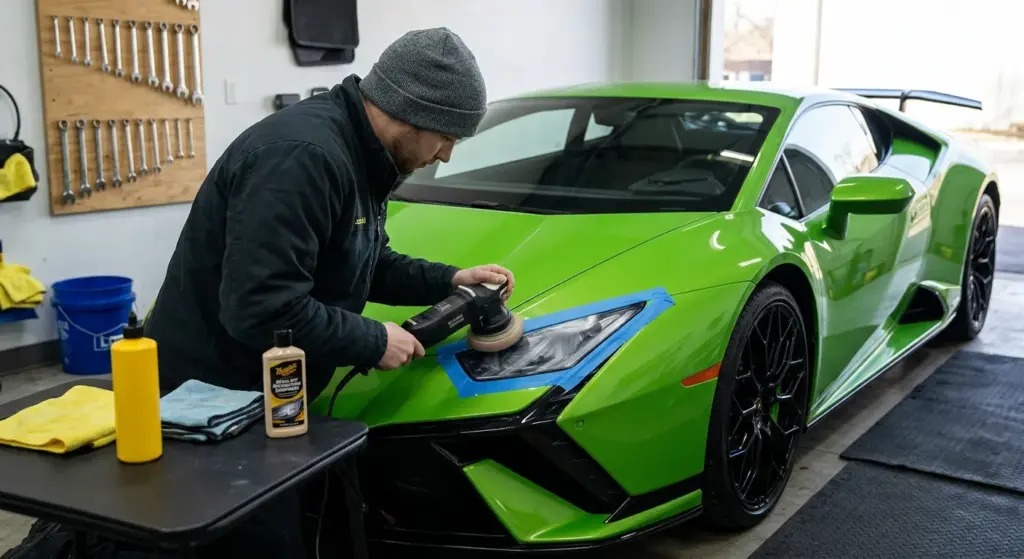
Compare an older lens with a newer vehicle and the difference may become much easier to see.
What Causes Yellow Headlight Lenses?
Many vehicle headlights use polycarbonate plastic because it combines low weight with good impact resistance.
The outer plastic is commonly treated with a coating designed to help it withstand outdoor conditions.
NHTSA has published information describing protective coatings used on polycarbonate headlamp lenses to help the material handle outdoor exposure and abrasion.
3M explains that the yellow appearance on an aging lens may come from deterioration of the polycarbonate surface or deterioration of the original UV coating.
Once that outer surface begins breaking down, the headlight can look:
- Yellow
- Milky
- Cloudy
- Dull
- Rough
- Hazy
- Pitted
A normal wash can remove dirt sitting on top of the lens.
It cannot remove damaged plastic or a degraded coating.
That is why Headlight Restoration in Lancaster, CA uses a different process from ordinary exterior washing.
Can Headlight Restoration Clear Cloudy Lenses?
Many headlights with exterior yellowing or haze can be improved through restoration.
3M states that yellowing and defects located on the outside surface of a headlight lens can be refurbished.
The final result depends on how badly the lens has aged.
A light layer of haze can be different from a lens with deep pitting, cracks, chemical damage, or years of surface deterioration.
The location of the damage also matters.
If the cloudiness is on the outer surface, restoration may help.
If the problem sits inside the headlight assembly, polishing the outside may do very little.
California Car Pros can look at the lens before the work begins and determine whether Headlight Restoration in Lancaster, CA makes sense for the condition being presented.
What Happens During Headlight Restoration?
Headlight restoration can involve several stages.
The amount of correction needed depends on the lens.
Cleaning the Lens
The headlight surface should be cleaned before correction work begins.
Dust, bugs, road grime, and loose dirt need to come off so the actual lens condition is easier to see.
This step also keeps loose grit from being rubbed into the surface during later work.
Protecting Nearby Paint
Headlights sit close to painted bumpers, fenders, hoods, and trim.
Those areas may need masking before sanding or polishing begins.
3M’s restoration directions call for protecting nearby painted and trim surfaces before abrasive work.
Removing the Damaged Layer
An oxidized lens may need sanding to remove the degraded outer material.
3M states that the yellowed or oxidized surface needs to be removed before clarity can be restored.
The sanding process may use more than one abrasive level.
The goal is to remove deteriorated material evenly rather than cutting deeply into one small section.
Refining the Surface
After the damaged layer has been removed, finer abrasive steps can reduce the marks created during the earlier correction stages.
The lens gradually becomes smoother and clearer.
Polishing
Polishing can further refine the surface and bring back transparency.
A properly performed process addresses the cloudy outer layer rather than simply placing a temporary shiny product over oxidation.
Protecting the Restored Lens
A restored polycarbonate surface still needs protection from outdoor exposure.
That step matters because the vehicle is going back into the same sunlight and road conditions that contributed to the deterioration.
Why UV Protection Matters After Restoration
Headlight Restoration in Lancaster, CA should account for UV exposure after the lens has been cleared.
The original lens was manufactured with protection against outdoor exposure.
Once damaged material and coating have been removed, simply polishing the plastic and leaving it bare may allow cloudiness to return.
NHTSA information on polycarbonate headlamp materials discusses the role coatings play in helping lenses meet outdoor exposure requirements.
3M’s headlight restoration systems also include protective finishing steps.
When scheduling restoration, ask how the restored surface will be protected after correction.
The service should look beyond how the lens appears on pickup day.
Headlight Restoration vs Headlight Replacement
A foggy headlight does not automatically need to be replaced.
Headlight Restoration in Lancaster, CA may be worth considering when:
- The problem is on the outside of the lens
- The lens is yellowed
- Surface haze is present
- Oxidation is visible
- The housing remains intact
- The lighting components still work
- There is no major crack in the assembly
Replacement may make more sense when physical damage goes beyond the outer lens surface.
That can include:
- Cracked housings
- Broken mounting points
- Deep lens fractures
- Severe crazing
- Damaged reflectors
- Failed lighting components
- Internal coating problems
- Heavy moisture inside the assembly
The catch is that a headlight can look cloudy for more than one reason.
The lens should be checked before assuming exterior restoration will solve the problem.
Outside Haze vs Moisture Inside the Headlight
A cloudy appearance does not always mean oxidation.
Look closely at where the haze appears.
Outside Headlight Oxidation
Exterior deterioration may look:
- Yellow
- Chalky
- Rough
- Cloudy
- Dull
- Uneven
The outer lens may feel different from clearer sections.
This type of condition may respond to Headlight Restoration in Lancaster, CA.
Moisture Inside the Assembly
Internal moisture can look like:
- Water droplets behind the lens
- Condensation
- Internal fog
- Water collecting in the lower part of the housing
- Moisture that returns after washing or rain
3M states that its restoration process does not repair moisture inside a headlight assembly or damage located on the rear side of the lens.
That type of problem may call for inspection of the housing, seals, vents, or complete lamp assembly.
Polishing the front surface will not remove trapped water.
Can Foggy Headlights Affect Light Output?
The lens sits directly between the headlight’s light source and the road.
NHTSA standards for plastic headlamp lens materials include requirements related to luminous transmission and haze following outdoor exposure testing.
That tells us lens clarity has a role in how light passes through the headlamp assembly.
3M also notes that headlight restoration can improve nighttime visibility when cloudy or yellowed exterior lenses are corrected.
Keep expectations realistic.
A restored lens cannot fix:
- A weak bulb
- A failing LED module
- Poor headlight aim
- Electrical trouble
- Damaged internal reflectors
- Failed projectors
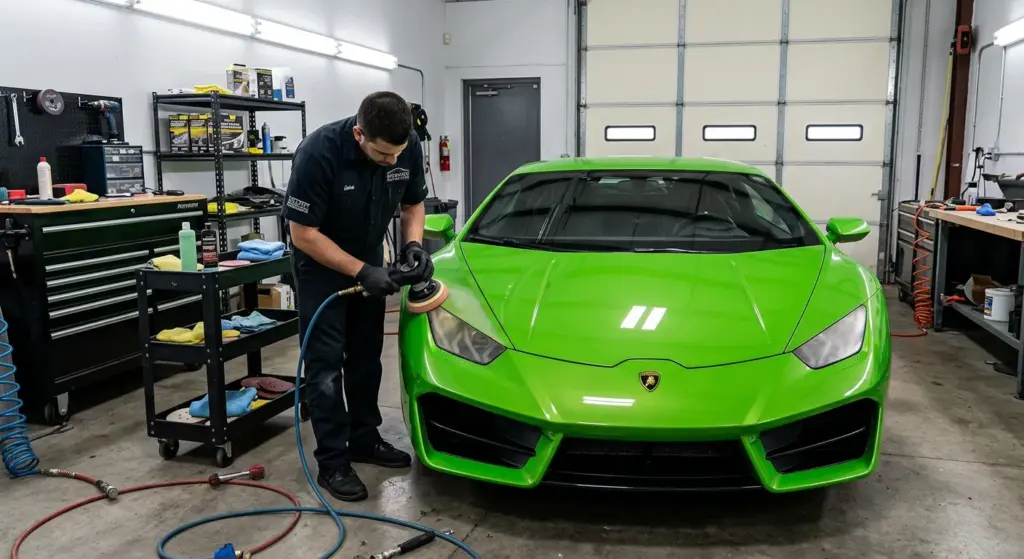
If headlights still appear weak after the exterior lenses are clear, the lighting system may need separate inspection.
High Desert Sand and Headlight Wear
Headlight Restoration in Lancaster, CA is not only about UV exposure.
3M also lists sand and road debris as factors that contribute to hazing, pitting, and deterioration.
The front of the vehicle meets these conditions first.
During regular Antelope Valley driving, headlight lenses can face:
- Fine sand
- Gravel
- Dust
- Small stones
- Bugs
- Road grit
- Tire-thrown debris
Repeated contact can leave tiny marks in the surface.
Some light surface defects may improve during restoration.
Deep pits may remain visible even after much of the surrounding haze has been removed.
This is another reason the headlights should be inspected before setting expectations for the finished result.
What Headlight Restoration Cannot Fix
Headlight Restoration in Lancaster, CA has limits.
It cannot repair every headlight problem.
Restoration may not solve:
- Internal condensation
- Broken housings
- Deep cracks
- Severe internal damage
- Broken mounts
- Failed bulbs
- Failed LED units
- Electrical trouble
- Severe chemical damage
- Heat deformation
- Damage on the rear side of the lens
General Motors has published service information showing that solvents and harsh cleaners can damage polycarbonate lamp lenses.
The same guidance notes that some types of chemical, heat, and impact damage may call for replacement rather than surface cleaning.
If the assembly has structural damage, restoration should not be treated as a substitute for repair.
How to Care for Restored Headlights
Once Headlight Restoration in Lancaster, CA is completed, gentle cleaning can help preserve the finished surface.
General Motors recommends cleaning polycarbonate exterior lamp lenses with:
- Cold or lukewarm water
- A soft cloth
- Normal automotive washing soap
Strong chemicals can harm clear plastic lenses.
Avoid using products such as:
- Harsh solvents
- Strong wheel cleaner
- Aggressive degreaser
- Abrasive household cleaners
- Rough scouring pads
Do not wipe a dusty headlight with a dry towel.
Lancaster, CA vehicles can collect fine dust quickly.
Rinse loose dirt and sand away before touching the lens with wash material.
Can PPF Be Applied to Headlights?
Paint protection film can be considered for suitable headlight lenses.
PPF places transparent urethane film over the surface and can create a physical layer between the lens and normal road contact.
California Car Pros works with PPF for painted areas and other suitable vehicle surfaces.
If you are interested in placing PPF over newly restored headlights, talk with the installer before either service begins.
The restoration products, curing period, lens condition, and PPF adhesive all need to be considered.
The restored surface should be ready before film is applied.
Headlight Restoration With Auto Detailing
Headlight Restoration in Lancaster, CA can be scheduled alongside other vehicle cleaning and appearance work.
California Car Pros currently lists headlight restoration on the a la carte menu within its auto detailing service.
Drivers may also want to discuss:
- Exterior washing
- Interior detailing
- Wheel and tire cleaning
- Paint correction
- Ceramic coating
- Paint protection film
- Window tint
If the entire vehicle needs attention, scheduling several compatible services together may make more sense than treating each area separately.
Tell California Car Pros what you want inspected when you make the appointment.
Who Should Consider Headlight Restoration?
Headlight Restoration in Lancaster, CA may make sense when the lenses no longer look clear but the assemblies are otherwise in usable condition.
Look for:
- Yellow tint across the lens
- Cloudiness
- Milky haze
- Oxidized areas
- Light surface pitting
- Dull plastic
- One headlight that looks clearer than the other
Uneven lens condition can happen when one headlight has been replaced in the past or when one side receives more outdoor exposure.
Older daily drivers can be good candidates.
So can vehicles being prepared for sale or a larger detailing appointment.
The service is not limited to enthusiast cars.
Sedans, trucks, SUVs, coupes, hybrids, and other vehicles can develop cloudy plastic lenses as they age.
Schedule Headlight Restoration in Lancaster, CA
Headlight Restoration in Lancaster, CA can improve many cloudy, yellowed, oxidized, and weathered exterior lenses without automatically replacing the full headlight assembly.
The service is most suited to deterioration located on the outside surface.
Moisture inside the housing, broken components, deep cracks, and internal damage need a different type of attention.
California Car Pros offers headlight restoration as an a la carte detailing service in Lancaster, CA.
California Car Pros
43235 Gingham Ave #108
Lancaster, CA 93535
Phone: (661) 744-5533
Our Lancaster shop also serves drivers from Palmdale, CA, Quartz Hill, CA, and nearby Antelope Valley communities.
Learn more about our Lancaster location or browse our auto detailing services.
Call (661) 744-5533 or use the California Car Pros contact page to schedule Headlight Restoration in Lancaster, CA.
Frequently Asked Questions
1. Can Headlight Restoration in Lancaster, CA remove yellowing?
Exterior yellowing caused by weathering, UV exposure, or deterioration of the outer polycarbonate surface can often be improved. 3M states that yellowing and defects on the outside surface of the lens can be refurbished.
2. Why do headlights turn cloudy in Lancaster, CA?
UV exposure, sand, road debris, climate conditions, lens age, and lens construction can all play a part. The outer protective coating or polycarbonate surface can deteriorate and leave the lens looking hazy or yellow.
3. Can headlight restoration remove moisture inside the housing?
No. Exterior restoration does not repair water or condensation trapped inside a headlight assembly. The housing, seals, vents, or another internal part may need inspection.
4. Is restoration worth trying before replacing the headlights?
It can be when the main problem is exterior oxidation, haze, or yellowing and the rest of the assembly is in usable condition. Cracks, broken mounting points, internal damage, or failed lighting parts may require another repair route.
5. Can foggy headlights reduce nighttime light?
A cloudy lens can affect how light passes through the headlamp. NHTSA standards for plastic headlight lens materials include limits related to light transmission and haze following outdoor exposure. Restoration does not fix weak bulbs, failed LEDs, poor aiming, or other lighting-system problems.
6. How should I wash restored headlights?
Use gentle automotive washing methods. General Motors recommends cold or lukewarm water, normal car wash soap, and a soft cloth for polycarbonate lamp lenses. Avoid harsh solvents and aggressive cleaners.
7. Where can I schedule Headlight Restoration in Lancaster, CA?
California Car Pros offers headlight restoration through its detailing service at 43235 Gingham Ave #108, Lancaster, CA 93535. Call (661) 744-5533 or use the contact page to schedule your vehicle.
Sources
Auto Detailing Services in Lancaster, CA & Palmdale, CA
Publisher: California Car Pros
Publication Date: No publication date listed
Used to confirm that California Car Pros currently lists headlight restoration as an a la carte detailing service and serves Lancaster, CA, Palmdale, CA, Quartz Hill, CA, and nearby communities.
3M Headlight Restoration System FAQ
Publisher: 3M
Publication Date: No publication date listed
Used for information about UV exposure, sand, road debris, yellowing, pitting, polycarbonate deterioration, degraded coatings, exterior restoration, and internal moisture limits.
3M Headlight Restoration Products
Publisher: 3M
Publication Date: No publication date listed
Used for information about sanding, refining, polishing, cloudy plastic lenses, oxidation, and restoration of headlight lens clarity.
3M Paint Finishing and Headlight Lens Restoration
Publisher: 3M
Publication Date: No publication date listed
Used for the cleaning, masking, sanding, refining, and protective finishing stages described in the restoration process.
NHTSA Interpretation on Polycarbonate Headlamp Lens Coatings
Publisher: National Highway Traffic Safety Administration
Publication Date: December 7, 1994
Used for information about polycarbonate headlamp lenses, outdoor exposure testing, haze, luminous transmission, surface deterioration, and protective coatings.
Exterior Lamp Lens Service Bulletin
Publisher: General Motors, hosted by NHTSA
Publication Date: January 2024
Used for polycarbonate headlight cleaning guidance and information about chemical, impact, and heat-related lens damage.
California Car Pros Contact Page
Publisher: California Car Pros
Publication Date: No publication date listed
Used for Lancaster, CA contact and shop information.
Transform Your Car's Appearance: Color Change Wraps in Palmdale, CA
Give your vehicle a fresh, new look with color change wraps from California Car Pros in Palmdale, CA. Discover how our custom wraps can transform your car's appearance while protecting its original paint.
Product Brand: Car Pros
5
Pros
- Give your vehicle a fresh, new look with color change wraps from California Car Pros in Palmdale, CA. Discover how our custom wraps can transform your car's appearance while protecting its original paint.
