

Headlight Protection Film in the Antelope Valley gives drivers a clear protective layer over headlight lenses that face rocks, sand, bugs, UV exposure, and road debris every time the vehicle is driven. For drivers in Lancaster, CA, Palmdale, CA, Quartz Hill, CA, and nearby areas, headlights spend years facing High Desert sun and material thrown from the roadway.
Modern headlights can be expensive assemblies, and the clear outer lens is constantly exposed.
Over time, that lens can develop:
- Small pits
- Surface scratches
- Chips
- Haze
- Yellowing
- Oxidation
- Bug residue
- Road-film buildup
California Car Pros provides Paint Protection Film for drivers throughout the Antelope Valley. Headlight protection film can be installed as part of a broader PPF plan to help place a sacrificial film layer between the lens and everyday road exposure.
Headlight film cannot reverse an already yellow or badly damaged lens. A lens that has already deteriorated may need restoration before protection film is considered.
If your headlights are still clear, installing protection film sooner can help reduce direct exposure to many of the conditions that contribute to pitting and surface wear.
Table of Contents
- What Is Headlight Protection Film?
- Why Headlights Get Pitted
- Why Headlights Turn Yellow
- How Headlight PPF Helps With Road Debris
- Can Headlight Film Help With Yellowing?
- Headlight PPF vs Headlight Restoration
- When Should You Install Headlight Protection Film?
- Why Antelope Valley Drivers May Want Headlight PPF
- Headlight PPF With Full Front Paint Protection Film
- Headlight PPF for Teslas
- How to Care for Headlight Protection Film
- What Headlight PPF Cannot Fix
- Questions to Ask Before Installing Headlight PPF
- Headlight Protection Film in Lancaster and Palmdale
- Headlight Protection Film FAQs
What Is Headlight Protection Film?
Headlight protection film is transparent protective film installed over the exterior lens of a suitable headlight assembly.
The idea is similar to PPF used on vehicle paint.
Rather than letting small debris hit the headlight lens directly, the film becomes the first surface facing the road.
Headlight Protection Film in the Antelope Valley may help guard suitable lenses against:
- Small rock impacts
- Road grit
- Sand
- Surface scratches
- Bug residue
- Road debris
- UV exposure
- Environmental contamination
XPEL states that its headlight protection film is designed to help protect headlights from scratches, chips, and UV damage.
The film remains transparent so light can continue passing through the lens.
Film selection and installation matter because headlights have curves, corners, and different lens shapes.
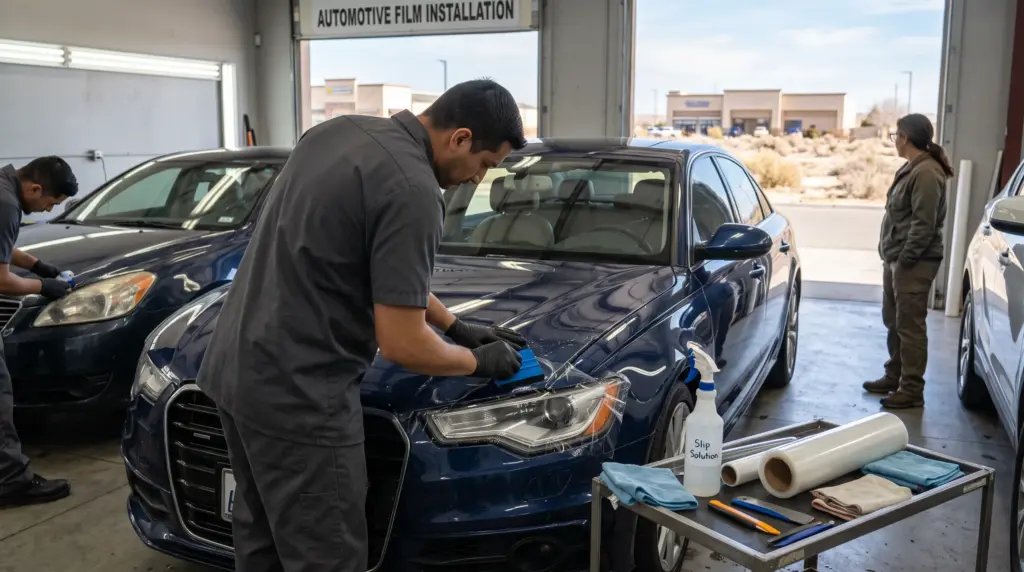
A professional installer should use material made for the application and fit it around the headlight correctly.
Why Headlights Get Pitted
Look closely at an older headlight under bright light and you may see hundreds of tiny marks across the lens.
These marks can come from years of road exposure.
Vehicles traveling at highway speeds regularly meet:
- Sand
- Small stones
- Road grit
- Bugs
- Loose material from other vehicles
The front bumper, hood, windshield, and headlights all face that material.
Headlights can be especially noticeable because a clear lens shows surface wear easily.
California Car Pros notes in its headlight restoration guide that 3M identifies sand, road debris, sunlight, climate, lens age, and lens material among factors associated with hazy, yellowed, and pitted lenses.
Small pits may start as minor marks.
After years of exposure, the lens can begin to look rough or cloudy.
Headlight PPF adds a replaceable film surface over the lens so some of that everyday contact reaches the film first.
Why Headlights Turn Yellow
Pitting and yellowing are different problems.
Many modern headlights use polycarbonate plastic because it is lightweight and impact resistant.
That plastic normally has an exterior coating intended to help it handle outdoor exposure.
Over time, sunlight, UV exposure, weather, road grime, and aging can affect the lens surface and its protective coating.
The headlight may begin to look:
- Yellow
- Cloudy
- Hazy
- Milky
- Dull
California Car Pros’ headlight restoration article discusses deterioration of the polycarbonate surface or its factory UV coating as causes of yellow-looking lenses.
Once deterioration is already present, simply covering it with PPF does not undo the damage.
That is why timing matters.
Film makes more sense as protection for a clear lens than as a fix for a badly deteriorated one.
How Headlight PPF Helps With Road Debris
Headlight Protection Film in the Antelope Valley acts as a sacrificial surface.
Road debris reaches the film before reaching the lens underneath.
That does not mean the headlight becomes impossible to damage.
A large enough object or severe impact can still damage the film, lens, or housing.
The goal is to reduce direct contact from many smaller forms of road exposure.
That can include:
- Gravel
- Sand
- Fine road grit
- Small stones
- Bugs
- Light scratches
XPEL describes its headlight protection film as a shield against scratches, chips, and UV damage.
This makes headlight PPF worth considering for vehicles that spend substantial time on highways or open roads.
Drivers commuting between Lancaster, CA and Palmdale, CA may see repeated front-end exposure over thousands of miles.
A protective film gives the lens another layer to take that wear.
Can Headlight Film Help With Yellowing?
Headlight Protection Film in the Antelope Valley may also help reduce exposure that contributes to lens aging.
XPEL states that its headlight protection film helps guard headlights from UV exposure and environmental contaminants.
That matters because UV exposure is one factor associated with yellowing and deterioration of plastic headlight lenses.
The wording matters.
Protection film can help shield the surface.
It should not be described as a guarantee that a headlight will never yellow.
Lens age, material, film condition, climate, care, and outdoor exposure can all affect what happens over time.
The film itself also needs inspection as it ages.
If an old protective film becomes worn or damaged, it may need removal and replacement.
Headlight PPF vs Headlight Restoration
Headlight PPF and headlight restoration are used at different stages.
Headlight Protection Film
Headlight PPF makes the most sense when the lens is already in good condition.
The goal is to help preserve it.
Headlight Restoration
Headlight restoration is used when the exterior lens has already become cloudy, yellowed, oxidized, or weathered.
California Car Pros offers headlight restoration in Lancaster, CA for suitable lenses.
Restoration addresses the damaged exterior surface.
Protection film can then be discussed afterward when appropriate.
A useful way to think about the difference is:
Clear lens: Consider protection.
Weathered lens: Inspect for restoration first.
Do not expect clear film to make damaged plastic look new by itself.
When Should You Install Headlight Protection Film?
The best time to think about headlight PPF is while the lenses are still clear and in good condition.
That often means:
- Soon after buying a new vehicle
- After installing replacement headlights
- After suitable headlight restoration
- Before heavy highway mileage
- Before long-term outdoor use
Newer vehicles can be good candidates because the goal is prevention rather than repair.
If the headlight already has chips or scratches, ask the installer to inspect it first.
Film follows the surface underneath it.
Damage may remain visible after installation.
Why Antelope Valley Drivers May Want Headlight PPF
Headlight Protection Film in the Antelope Valley can make sense because vehicles in the area face a mix of road and weather exposure.
Drivers in Lancaster, CA, Palmdale, CA, and Quartz Hill, CA may regularly experience:
- Strong sunlight
- Dry weather
- Dust
- Windblown sand
- Highway travel
- Bugs
- Loose road material
A vehicle that spends years traveling through those conditions can accumulate wear on forward-facing surfaces.
Headlights sit directly in that path.
A commuter may put thousands of miles of exposure on the lenses each year.
A weekend vehicle may cover fewer miles but still spend long periods parked outside.
Headlight film can help create a buffer between the lens and these conditions.
Headlight PPF With Full Front Paint Protection Film
Headlight film often makes sense as part of a larger front-end PPF package.
California Car Pros currently offers Paint Protection Film for areas such as:
- Front bumper
- Hood
- Front fenders
- Mirrors
- Headlights
- Other body panels depending on coverage
If you are already protecting the bumper and hood, leaving the headlights exposed may not match your goals.
Headlights sit alongside those panels and face similar road debris.
A full-front protection plan can place film across several high-contact areas during the same project.
Ask exactly which panels and lights are included before scheduling.
Package descriptions can differ from one shop to another.
Headlight PPF for Teslas
Tesla owners may also want to include headlights when planning front-end PPF.
California Car Pros provides dedicated Tesla Paint Protection Film service.
Headlight PPF can be discussed for vehicles such as:
- Tesla Model 3
- Tesla Model Y
- Tesla Model S
- Tesla Model X
- Cybertruck when compatible with the lighting surfaces
Tesla headlights can have complex shapes, so proper fitting matters.
Owners who spend a lot of time commuting around the Antelope Valley may want to discuss headlight coverage along with the front bumper, hood, fenders, and mirrors.
How to Care for Headlight Protection Film
Headlight Protection Film in the Antelope Valley still needs normal exterior care.
Wash the Headlights Regularly
Do not allow layers of bugs, grime, or dirt to sit on the film.
Clean the lenses during regular vehicle washing.
Remove Bugs Promptly
Bug residue can dry onto forward-facing surfaces.
Removing it sooner is easier than letting it remain for long periods.
Avoid Aggressive Scrubbing
Use soft wash materials.
Do not attack the film with abrasive pads or harsh scraping tools.
Inspect the Edges
Look at the film occasionally during washing.
If you see an edge beginning to lift, contact the installer rather than pulling on it.
Ask About Cleaning Products
Use products compatible with the installed film.
Your installer can tell you what is suitable for the PPF product on your vehicle.
What Headlight PPF Cannot Fix
Headlight PPF is protective film.
It does not repair every headlight problem.
Film will not fix:
- Cracked lenses
- Moisture inside a headlight housing
- Broken mounting tabs
- Failed LEDs or bulbs
- Deep existing pitting
- Severe exterior oxidation
- Internal haze
- Electrical problems
A headlight with these issues needs inspection before film is considered.
California Car Pros’ headlight restoration service information notes that restoration is best suited to deterioration on the exterior lens surface.
Internal problems and broken assemblies need another type of repair.
Questions to Ask Before Installing Headlight PPF
Before scheduling Headlight Protection Film in the Antelope Valley, ask the installer:
- What film will be installed on my headlights?
- Is the film clear?
- Does the film offer UV protection?
- Is headlight coverage included with my PPF package?
- Does the film need to be replaced after a certain period?
- What warranty comes with the film?
- Can the film be removed later?
- Does my headlight need restoration first?
- Will existing pitting still be visible?
- How should I clean the film?
- What should I do if an edge lifts?
- Can ceramic coating be applied over the film?
- Have you installed film on my vehicle model before?
These questions can help set clear expectations before installation.
Headlight Protection Film in Lancaster and Palmdale
California Car Pros provides PPF services for drivers throughout Lancaster, CA, Palmdale, CA, Quartz Hill, CA, and nearby Antelope Valley communities.
Our Lancaster shop is located at:
California Car Pros
43235 Gingham Ave #108
Lancaster, CA 93535
Phone: (661) 744-5533
Learn more on our Lancaster, CA location page.
Drivers closer to Palmdale, CA can also visit our Palmdale, CA location.
California Car Pros provides:
If your headlights are already cloudy, yellowed, or oxidized, ask whether restoration should happen before film is considered.
If the lenses are still clear, headlight PPF can help add a physical barrier against the conditions that cause pitting and surface wear.
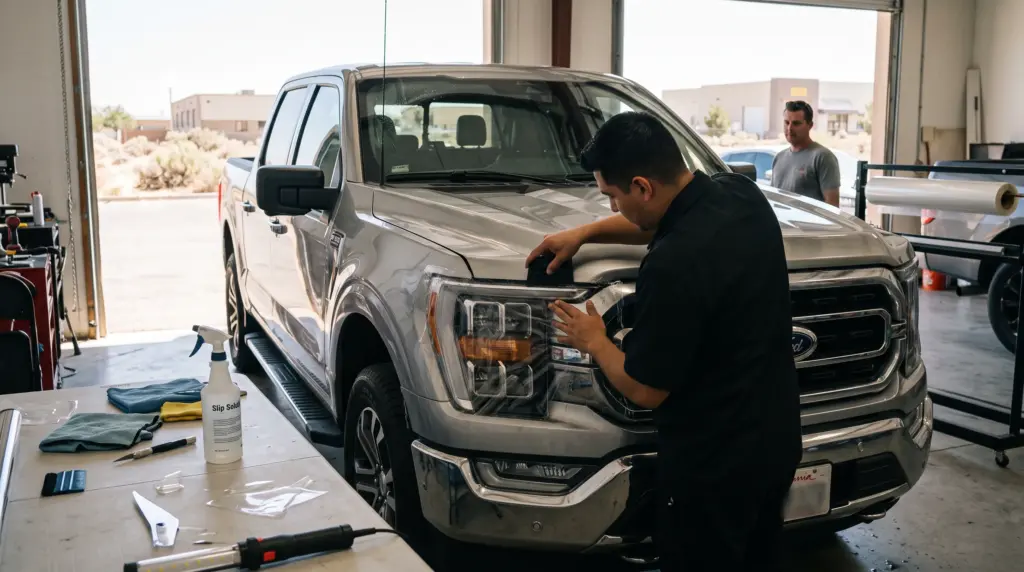
Call (661) 744-5533 or use the California Car Pros contact page to schedule an appointment.
Headlight Protection Film FAQs
1. What is headlight protection film?
Headlight protection film is a transparent protective film installed over suitable headlight lenses. It creates a sacrificial surface between the lens and road debris, small stones, sand, bugs, scratches, and other exterior exposure.
2. Can headlight PPF help stop pitting?
Headlight PPF can help protect the lens from many small impacts and scratches that contribute to surface pitting. It cannot guarantee protection from every impact, and severe road debris can still damage a lens.
3. Can headlight protection film help prevent yellowing?
Headlight film can help shield lenses from UV exposure and environmental contamination. XPEL states that its headlight film helps protect against UV damage and yellowing. Film cannot reverse yellowing that has already developed.
4. Should yellow headlights be restored before installing PPF?
A yellow, cloudy, or oxidized lens should be inspected first. If the deterioration is on the exterior surface and the lens is suitable for restoration, that service may need to happen before protection film is installed.
5. How long can headlight protection film last?
Service life depends on the film, exposure, maintenance, and installation. XPEL states that its headlight protection film can last up to 10 years depending on environmental conditions and care. Ask your installer about the warranty and expected life of the exact film being applied.
6. Is headlight PPF worth adding to a full-front PPF package?
It can make sense because headlights face the same road debris as the bumper, hood, mirrors, and front fenders. If front-end protection is your goal, ask whether headlight film is included with the package you are considering.
7. Where can I get Headlight Protection Film in the Antelope Valley?
California Car Pros provides PPF services for drivers in Lancaster, CA, Palmdale, CA, Quartz Hill, CA, and nearby communities. Call (661) 744-5533 or visit the contact page to discuss headlight film and other front-end PPF coverage.
Sources
- Headlight Protection Film
Publisher: XPEL
Publication Date: No publication date listed - Headlight Protection Film FAQs
Publisher: XPEL
Publication Date: No publication date listed - Headlight Restoration in Lancaster, CA: Clear Up Foggy Lenses
Publisher: California Car Pros
Publication Date: No publication date listed - Paint Protection Film
Publisher: California Car Pros
Publication Date: No publication date listed - California Car Pros Lancaster Location
Publisher: California Car Pros
Publication Date: No publication date listed - California Car Pros Palmdale Location
Publisher: California Car Pros
Publication Date: No publication date listed - California Car Pros Contact Page
Publisher: California Car Pros
Publication Date: No publication date listed
Transform Your Car's Appearance: Color Change Wraps in Palmdale, CA
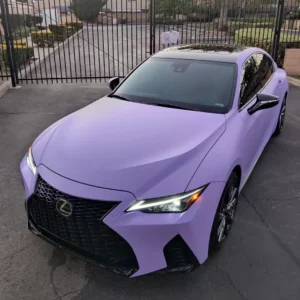
Give your vehicle a fresh, new look with color change wraps from California Car Pros in Palmdale, CA. Discover how our custom wraps can transform your car's appearance while protecting its original paint.
Product Brand: Car Pros
5
Pros
- Give your vehicle a fresh, new look with color change wraps from California Car Pros in Palmdale, CA. Discover how our custom wraps can transform your car's appearance while protecting its original paint.
