

Paint correction before PPF can make sense when swirl marks, light scratches, oxidation, haze, or other visible paint defects are already present. Paint protection film goes over the surface that exists today. It does not erase damage underneath it.
That does not mean every car needs paint correction before PPF.
A newer vehicle with clean paint may only need proper washing, decontamination, and PPF preparation. A vehicle that has spent years going through automatic washes may need polishing or more involved correction before film goes on.
California Car Pros provides Paint Protection Film and Paint Correction for drivers in Lancaster, CA, Palmdale, CA, Quartz Hill, CA, and nearby Antelope Valley communities.
The right approach starts with inspecting the paint.
If you are deciding whether to get paint correction before PPF, here is what to look for and which defects may be worth addressing first.
Table of Contents
- What Is Paint Correction Before PPF?
- Does PPF Hide Paint Defects?
- When Paint Correction Before PPF Makes Sense
- When You May Not Need Paint Correction
- What Paint Correction Can Address
- What Paint Correction Cannot Repair
- Do New Cars Need Paint Correction Before PPF?
- Should You Correct the Whole Car or Only PPF Panels?
- How Paint Preparation Affects the Finished PPF
- Paint Correction Before Full Front PPF
- Paint Correction Before Full Vehicle PPF
- Paint Correction, PPF, and Ceramic Coating
- Questions to Ask Before PPF Installation
- Paint Correction and PPF in Lancaster and Palmdale
- Paint Correction Before PPF FAQs
What Is Paint Correction Before PPF?
Paint correction is a machine-polishing process used to reduce visible defects in automotive paint.
Depending on the condition of the vehicle, paint correction may address:
- Swirl marks
- Light scratches
- Haze
- Oxidation
- Holograms
- Wash marks
- Some water-spot damage
- Dull-looking paint
California Car Pros currently offers several paint correction services, including a single-stage polish, one-step correction, and two-step correction.
Paint correction before PPF is simply the process of addressing suitable paint defects before protective film is installed over the panel.
The reason is straightforward.
PPF covers paint.
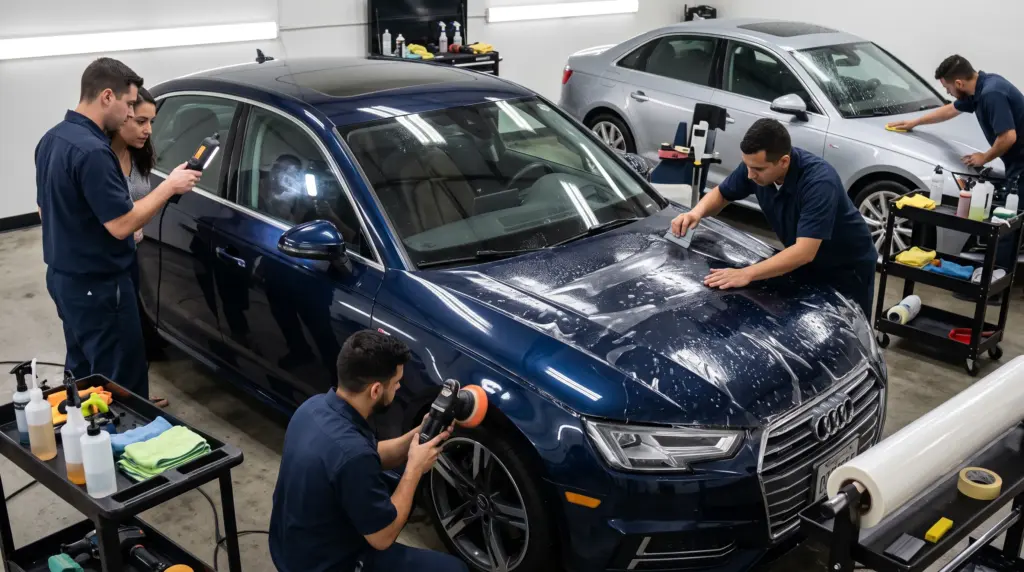
If a defect is visible underneath the film, it may still affect the finished appearance.
Does PPF Hide Paint Defects?
PPF should not be treated as a way to repair damaged paint.
California Car Pros notes in its Antelope Valley PPF guidance that paint protection film does not fix existing chips, swirl marks, stains, or scratches.
A clean installation can make a vehicle look glossy, but that does not mean the film removes what is underneath it.
Think of PPF as a clear protective layer.
If you put clear material over a scratched surface, the scratch is still part of that surface.
Some very light marks may become less noticeable once film is installed, depending on the paint color, lighting, film, and defect. That is not the same as removing the defect.
If you care about the appearance underneath the film, inspect the paint first.
When Paint Correction Before PPF Makes Sense
Paint correction before PPF is worth discussing when visible defects are present on panels that will receive film.
Common signs include:
- Circular swirl marks under sunlight
- Fine wash scratches
- Machine-polishing haze
- Light oxidation
- Dull paint
- Holograms
- Light scratches that have not gone through the paint
- Some etched water spots
Dark colors can make these issues easier to see.
Black, dark blue, and other deep colors often reveal wash marks under direct lighting.
If you are installing Full Front PPF on a vehicle with visible hood swirls, correcting the hood before applying film may give you a cleaner-looking starting surface.
The same idea applies to fenders, bumpers, mirrors, and other panels receiving PPF.
When You May Not Need Paint Correction
Paint correction before PPF is not automatically required.
A vehicle may not need correction when:
- The paint is new and in clean condition
- Swirl marks are not visible
- There are no meaningful scratches
- The finish already looks clear and glossy
- The panels have been cared for with safe wash methods
- The installer determines correction will not improve the result enough to justify the extra work
This is why inspection should come before polishing.
Removing clear coat unnecessarily does not make sense.
California Car Pros explains that paint correction works by removing a very small amount of clear coat to level suitable defects.
That means correction should be based on what the paint actually needs.
A new vehicle should not receive aggressive correction simply because PPF is being installed.
What Paint Correction Can Address
Paint correction works on defects located within a workable portion of the painted surface.
California Car Pros lists swirl marks, scratches, oxidation, holograms, and sun fading among the concerns addressed by its correction packages.
Swirl Marks
Swirls often come from poor washing and drying methods.
They can be especially visible under bright sun.
Paint correction can reduce or remove suitable swirl marks before PPF installation.
Light Scratches
Some shallow scratches can be polished.
The installer or detailer needs to inspect their depth first.
Holograms
Improper machine polishing can leave curved or hazy marks known as holograms.
Correction can address suitable holograms before film goes over the paint.
Oxidation and Dull Paint
Some faded or dull finishes may respond to polishing.
The paint condition needs to be checked first, especially on older vehicles.
Water Spot Damage
Some water spots sit on the surface.
Others have etched farther into the finish.
Correction may improve suitable spotting, but the result depends on the depth of the damage.
What Paint Correction Cannot Repair
Paint correction has limits.
It cannot fix every defect before PPF.
Problems that may require another type of repair include:
- Deep scratches through the clear coat
- Exposed primer
- Exposed metal
- Deep rock chips
- Cracked paint
- Peeling clear coat
- Rust
- Dents
- Failed repaint work
- Loose paint
California Car Pros states that deeper gouges reaching the primer may need more extensive repair rather than polishing.
This distinction matters before PPF installation.
Film should not be expected to repair structural paint failure.
If a panel has peeling clear coat, rust, or loose paint, the vehicle may need body or paint repair before PPF is considered.
Do New Cars Need Paint Correction Before PPF?
Not always.
A new vehicle can be an excellent candidate for PPF without full paint correction.
Still, “new” does not guarantee flawless paint.
A new car may have:
- Dealer wash marks
- Transportation marks
- Water spots
- Light scratches
- Adhesive residue
- Dust contamination
- Machine-polishing marks
The paint should be inspected under proper lighting before a decision is made.
If no meaningful defects are present, extensive correction may be unnecessary.
If a few light defects appear on the hood or fenders, spot polishing or a lighter correction step may be enough.
This is another reason to have the installer look at the vehicle rather than deciding on a correction package before anyone sees the paint.
Should You Correct the Whole Car or Only PPF Panels?
This depends on your PPF coverage and the condition of the vehicle.
If you are installing Full Front PPF, you may only be concerned with correcting:
- Front bumper when appropriate
- Hood
- Front fenders
- Mirrors
- Other covered areas
If the rest of the vehicle also has visible swirls, you may decide to correct more of the exterior so the finish looks consistent.
For Full Vehicle PPF, more of the paint should be inspected because film will cover a larger portion of the body.
Ask the shop which panels actually need work.
Do not assume a full-car correction is required simply because one or two areas have defects.
How Paint Preparation Affects the Finished PPF
PPF installation starts with a clean surface.
Before film is applied, the vehicle needs preparation that can include:
- Washing
- Paint inspection
- Surface decontamination
- Removal of wax or residue
- Adhesive removal when needed
- Cleaning panel edges
- Correction when needed
Paint correction before PPF is only one part of the process.
Even paint that does not need polishing still needs proper preparation.
Dust, wax, old sealant, tar, contamination, or residue should not be trapped under the film.
A clean surface also helps the installer inspect the paint before installation begins.
This gives the shop and vehicle owner a chance to document chips, scratches, repaint work, or other existing conditions.
Paint Correction Before Full Front PPF
California Car Pros currently lists its Full Front PPF package with coverage for:
- Front bumper
- Full hood
- Full front fenders
- Mirrors
- Headlights
These panels face much of the road debris encountered during daily driving.
They are also highly visible.
If the hood has swirl marks or scratches, paint correction before PPF may make sense before the film is installed.
Full-hood film covers the entire painted surface, so you may prefer to correct visible defects first rather than placing film over them.
The fenders deserve the same inspection.
A newer vehicle may only need cleaning and preparation.
An older daily driver may benefit from polishing first.
Paint Correction Before Full Vehicle PPF
Full Vehicle PPF increases the number of painted surfaces going under film.
California Car Pros currently lists full-body panel coverage, wrapped edges, mirrors, headlights, and taillights with its Full Vehicle package.
Before that much film is installed, inspect the whole exterior carefully.
Look at:
- Hood
- Roof
- Doors
- Fenders
- Quarter panels
- Trunk or liftgate
- Bumpers
- Painted mirror surfaces
If the vehicle has a consistent pattern of swirl marks, broader paint correction before PPF may make sense.
If the paint is already in excellent condition, extensive correction may not be needed.
The decision should come from the paint inspection rather than the size of the PPF package alone.
Paint Correction, PPF, and Ceramic Coating
Some vehicle owners plan three services together:
- Paint correction
- PPF
- Ceramic coating
The sequence matters.
Paint correction is performed before film because the goal is to prepare the underlying paint.
PPF is then installed on the selected panels.
A compatible ceramic coating may then be discussed for suitable film and uncovered surfaces.
Planning the services together can help avoid doing work in the wrong order.
Tell California Car Pros about all the protection services you are considering before the first appointment.
Questions to Ask Before PPF Installation
Before deciding whether you need paint correction before PPF, ask:
- Can you inspect the paint before I choose a correction package?
- Which defects are visible?
- Which defects can actually be corrected?
- Are there deep scratches that polishing cannot fix?
- Does the vehicle have repaint work?
- Do only the PPF panels need correction?
- Is full-car correction necessary?
- Would a light polish be enough?
- How much defect removal is realistic?
- What preparation is included before PPF?
- Which PPF package am I choosing?
- Which panels will receive film?
- Should ceramic coating be done afterward?
- What warranty comes with the PPF?
- How should I care for the vehicle after installation?
A good inspection can save you from paying for correction the paint does not need.
It can also prevent visible defects from being covered before you have a chance to address them.
Paint Correction and PPF in Lancaster and Palmdale
California Car Pros provides paint correction and PPF for drivers throughout Lancaster, CA, Palmdale, CA, Quartz Hill, CA, and neighboring Antelope Valley communities.
Our Lancaster location is:
California Car Pros
43235 Gingham Ave #108
Lancaster, CA 93535
Phone: (661) 744-5533
Learn more about our Lancaster, CA location.
Drivers closer to Palmdale, CA can also visit our Palmdale, CA location.
California Car Pros provides:
If you are unsure whether you need paint correction before PPF, start with an inspection rather than assuming the answer is yes.
A clean new vehicle may need little beyond normal PPF preparation.
A vehicle with swirl marks, scratches, oxidation, haze, or polishing defects may benefit from correction first.
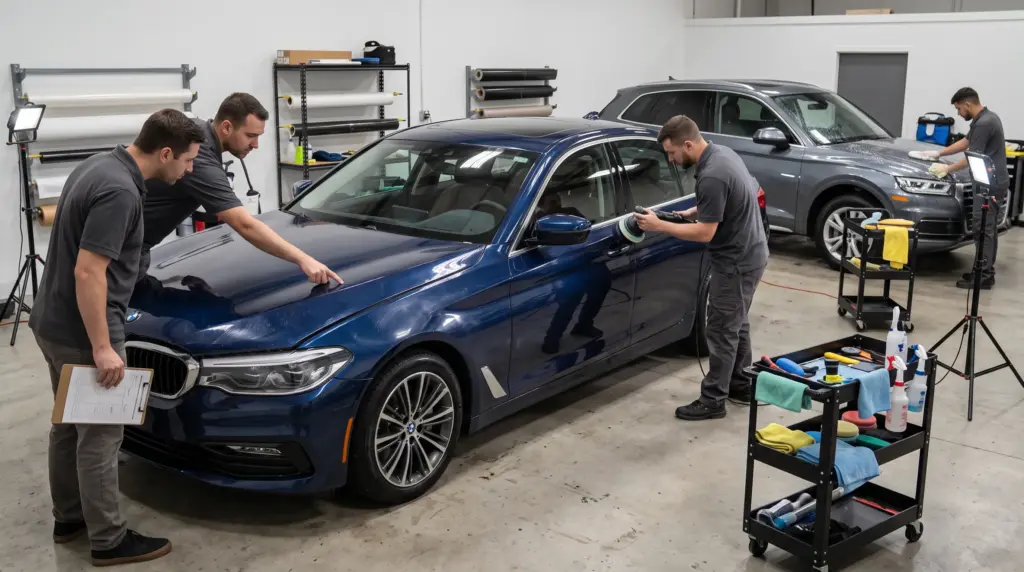
Call (661) 744-5533 or visit the California Car Pros contact page to schedule an appointment.
Paint Correction Before PPF FAQs
1. Do you always need paint correction before PPF?
No. Paint correction before PPF depends on the condition of the paint. A newer vehicle with clean paint may only need proper washing, decontamination, and installation preparation. Correction makes more sense when visible defects are present.
2. Will PPF hide swirl marks?
PPF should not be expected to remove swirl marks. California Car Pros notes that PPF does not fix existing swirls, scratches, chips, or stains. If visible swirls bother you, ask whether they should be corrected before film installation.
3. Can PPF go over scratches?
PPF can be installed over some existing paint defects, but the scratches do not disappear simply because film covers them. Light scratches may be suitable for correction first. Deep scratches may require another type of repair.
4. Does a brand-new car need paint correction before PPF?
Not automatically. New vehicles should be inspected first. Some arrive with very clean paint, while others may have wash marks, light scratches, water spots, or transportation marks. Only correct what the paint actually needs.
5. Should I correct the entire vehicle before Full Front PPF?
Not necessarily. If only the hood and front fenders have defects, those panels may be the main concern. If swirl marks appear across the whole vehicle, broader correction can be discussed. The decision should follow a paint inspection.
6. What is the difference between paint correction and PPF?
Paint correction reduces suitable defects already present in the finish. PPF places a transparent protective film over suitable vehicle surfaces to help guard against future road debris, chips, scratches, and related exposure.
7. Where can I get paint correction before PPF in the Antelope Valley?
California Car Pros provides paint correction and paint protection film in Lancaster, CA and Palmdale, CA for drivers throughout the Antelope Valley. Call (661) 744-5533 or use the contact page to schedule an inspection and discuss the condition of your paint.
Sources
- Paint Correction Services in Lancaster, CA & Palmdale, CA
Publisher: California Car Pros
Publication Date: No publication date listed - Paint Protection Film in Lancaster, CA & Palmdale, CA
Publisher: California Car Pros
Publication Date: No publication date listed - Paint Protection Film for Antelope Valley Commuters on the 14
Publisher: California Car Pros
Publication Date: No publication date listed - California Car Pros Services
Publisher: California Car Pros
Publication Date: No publication date listed - California Car Pros Contact Page
Publisher: California Car Pros
Publication Date: No publication date listed
Transform Your Car's Appearance: Color Change Wraps in Palmdale, CA
Give your vehicle a fresh, new look with color change wraps from California Car Pros in Palmdale, CA. Discover how our custom wraps can transform your car's appearance while protecting its original paint.
Product Brand: Car Pros
5
Pros
- Give your vehicle a fresh, new look with color change wraps from California Car Pros in Palmdale, CA. Discover how our custom wraps can transform your car's appearance while protecting its original paint.
